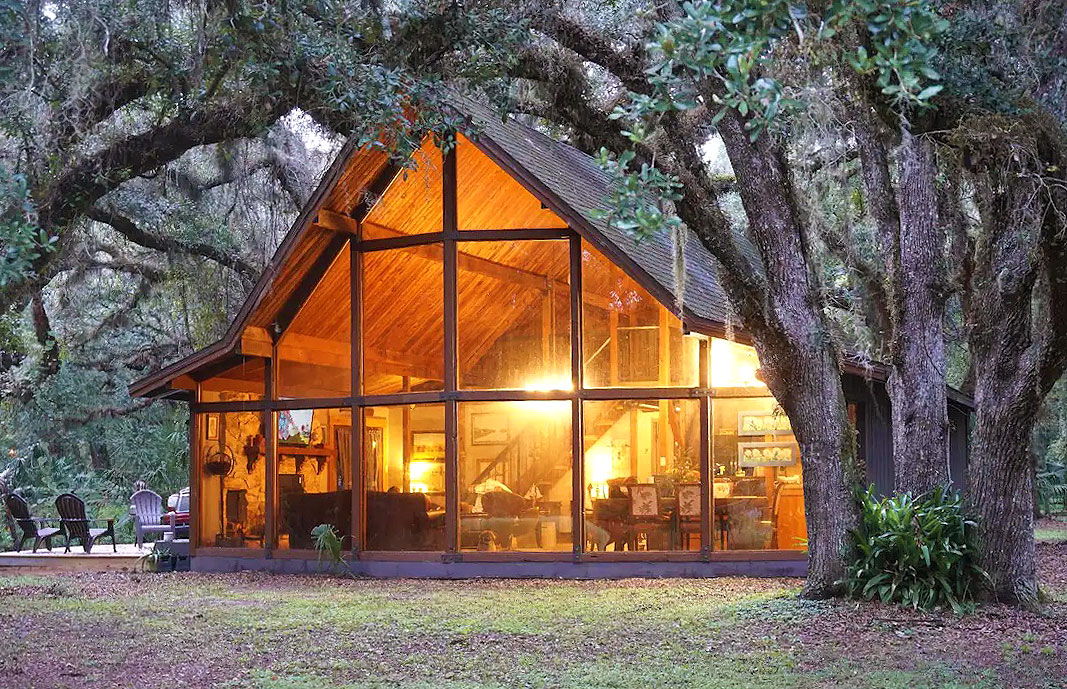
16 Insanely Cool Cabins in Florida You Can Rent for a Weekend

Looking to stay in some of the coolest cabins in Florida? We’ve got you covered with 16 hot options!

Hey there, sunshine seekers and adventure enthusiasts! If you’re on the hunt for a unique and unforgettable getaway, look no further than the Sunshine State. Florida isn’t just about theme parks and sandy beaches – it’s also home to some seriously cool cabins that are waiting to be your home away from home for a weekend escape.

Picture yourself surrounded by the tranquil beauty of nature, waking up to the melodies of chirping birds, and sipping your morning coffee with breathtaking views right outside your doorstep. Whether you’re yearning for a cozy cabin nestled in the woods, a rustic retreat by a serene lake, or a chic modern oasis in the midst of nature, Florida has you covered.

In this guide, we’re unveiling 16 insanely cool cabins scattered across Florida that you can rent for a weekend that promises to be nothing short of extraordinary. From the Panhandle to the Keys, these hidden gems offer the perfect blend of relaxation and adventure, making them the ideal backdrop for your next mini-vacation.

So, pack your bags, gather your loved ones, and get ready to embark on a cabin adventure like no other. Let’s dive in and explore the wonders that await in the Sunshine State’s most charming cabins!

16. Hillsborough River

The best cabins in Florida to rent for a weekend | Airbnbs in Florida | Hillsborough River
vrbo.com

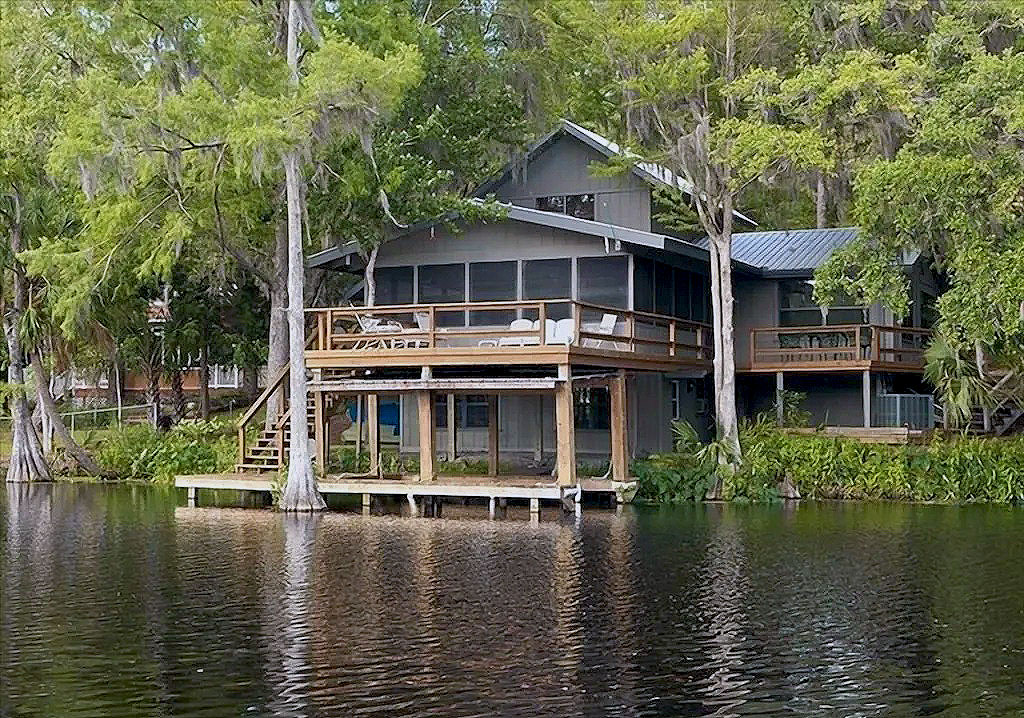
The Hillsborough River Cabin is a must-see if you’re seeking an unusual cabin-style place to stay in Tampa.

Completely renovated in 2015, this place has one bedroom and one bathroom to accommodate four guests. The two-story duplex has a king-sized bed and a pull-out couch that is useful as a bed.

But if you are traveling with a big group, there’s an additional house, Heaven on the Hillsborough River, that can be combined to fit up to 9 people.

Further, you can spend most of your time on the open-air patio downstairs, seated at the outdoor table or the bar looking out over the water. There is also a tiny dock where you can kayak or canoe through the waters.

But getting on the Pirate Water Taxi, which picks up next door at Ricks on the River Marina, is one of the best ways to see the river. Along the Tampa Riverwalk, you can get on and off at places like Ulele, the Sail Pavilion, or Curtis Hixon Park while enjoying the beautiful river and downtown views.

The spot has basic cable, a smart TV, and Verizon WIFI, so you can sign in to your own Netflix or Amazon accounts. You will also have a fully stocked kitchen, sheets, towels, and a washer and dryer, among other things.

Click here to book.

15. Chic a si Cottage

The best cabins in Florida to rent for a weekend | Airbnbs in Florida | Chic a si Cottage
vrbo.com

One of the few original cabins in Florida, right upon the white sands of Indian Rock Beach, will be perfect for people who want to relax.

Chic a si Cottage is a classic beach house with three bedrooms and two bathrooms set among lush tropical plants. It won a Historic Preservation Award in 2004, so you can be sure it will be worth your time to stay here.

However, the cottage isn’t as big, but it is perfect for one or two couples or a small household. The outdoor area looks very cute, and one of the best things about the property is its vast private outdoor shower where you can watch beautiful sunsets while you shower.

Moreover, this Florida cabin boasts a construction from cypress wood, accentuated by an authentic gingerbread trim. But that’s not all – its distinctive features extend to a tin roof and classic Bermuda shutters. Despite these charming old-world touches, every modern convenience and facility has been thoughtfully incorporated, ensuring a fully-equipped and cozy rental space.

These attributes have contributed to the overwhelmingly positive reviews and have solidified this Florida retreat as one of the most enchanting and meticulously maintained private getaways. It’s highly likely that you’ll find yourself equally enamored, whether you’re seeking solace by the beach, accompanied by the soothing sounds of lapping waves, or utilizing it as a launching pad for your explorations of the surrounding area.

Click here to book.

14. Castaway Cottage

The best cabins in Florida to rent for a weekend | Airbnbs in Florida | Castaway Cottage
vrbo.com

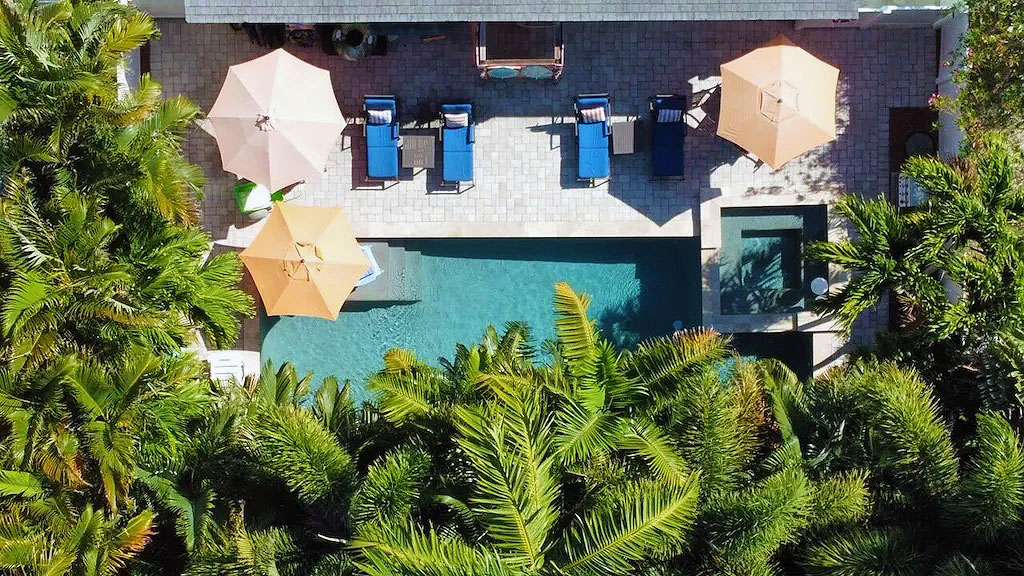
If you want to stay near Bean Point on Anna Maria Island in your oasis with a heated spa and pool, just a 4-minute walk from the beach, go to Castaway Cottage!

Castaway Cottage ranks among the finest cabins in Florida for people who want a tropical oasis. It has two bedrooms and one bathroom, and it sleeps five. There is enough space for everyone, with two queen bedrooms and a pull-out couch.

Plus, it provides everything from beach towels to the basics, pack n’ plays, and strollers. They also welcome pets!

The cabin uses a street-legal golf cart with four seats, umbrellas, beach chairs, and wagons. Your stay also comes with bikes, stand-up paddle boards, and a kayak, so you won’t run out of things to do. These are perfect for strolling the islands or having fun in the pristine waters.

You can also use the outdoor shower, outdoor TV, and outdoor seating while in the heated pool or hot tub.

What’s more, thoughtful touches like complimentary chocolate, wine, water, coffee, and tea are available. But if you’d rather eat out, you can take the sandy beach path towards Rod & Reel Pier, one of the best restaurants in town, where you can eat fresh fish or have a sunset cocktail.

Plus, Anna Maria Island has so many fun things to do, making this an awesome location to stay at.

Click here to book.

13. Le Petit Suite

The best cabins in Florida to rent for a weekend | Airbnbs in Florida | Le Petit Suite
vrbo.com

Next on this list is Le Petit Suite.

Le Petit Suite is a private cabin in Mount Dora tucked between oak trees that are over 100 years old. The 500-square-foot cottage has a driveway, a private deck in the back, a fire pit, and a BBQ grill. Also, it provides a welcome bottle of wine and a continental breakfast.

More importantly, you can access everything you might need here. And, if you need anything else, the hospitable owners live right there, and you can ask them. 

The best part about this rental is how cute and convenient it is to reach. A visit here will enable you to get the most out of Mt. Dora, a great place to do things like kayaking, fishing, watching birds and other wildlife, antiquing, and wine tasting.

If you want to try fishing, Grantham Point Park is nearby. You can also use the boat ramp to get out on the water and have a great time.

But if you want to have a getaway in nature, Mount Dora Recreation and Nature Park is just a few minutes away by car. It has many trails for walking and biking, picnic areas, playgrounds, and other places to have fun.

With everything you can access from this property, it’s not hard to see why this Florida cabin has hundreds of great reviews.

Click here to book.

12. Oasis in the Woods

The best cabins in Florida to rent for a weekend | Airbnbs in Florida: Oasis in the Woods
booking.com

Families who prefer their own space can get away to Oasis in the Woods.

This cabin is in Mcalpin, Florida, close to Itchetucknee Springs and Suwannee River. It is a nature lover’s dream and boasts a natural wood wall and rustic furniture that are very comfortable.

Furthermore, this property has five acres of privacy, an indoor swim spa featuring super jetted massage seats, a gym, and a sauna in a 2500-square-foot spa room with 18-foot cathedral ceilings.

There is also a private pool outside. Aside from that, the spa room has relaxation cushions and mats, making it a great place to meditate.

The place has three bedrooms, an open dining room, a well-equipped kitchen, and a lounge room with a fireplace.

But the best thing about this cabin is that it is a lovely private oasis in the woods. It is only an hour’s drive from the stunning Gulf of Mexico beaches, while it takes an hour and thirty minutes to drive to the Atlantic Ocean.

If you pay extra, you can have events here with chef-prepared meals and licensed massage therapists. But people who want a more active vacation can use the cabin as a base to go river tubing, fishing, kayaking, scuba diving, or shopping for antiques.

Lastly, many people may not need to know this, but a great butcher shop is just down the road. You can visit that as well!

Click here to book.

11. Lakefront Cabin On Secluded Lake Kerr

The best cabins in Florida to rent for a weekend | Airbnbs in Florida | Lakefront Cabin On Secluded Lake Kerr
vrbo.com

This cabin on Lake Kerr is among the most charming ones you can rent in Florida. This place is so cute, and the seclusion makes it even better.

It has two rooms, one and a half bathrooms, and enough space for six people to sleep. Also, a king-size bed faces the lake, and the other room has two queen beds. Meanwhile, the kitchen is open to the lake, making cooking fun.

Moreover, the decor looks just like what you would expect from a log cabin. The house has hardwood floors and granite countertops. The deck has a large hot tub, a fire pit, and a large patio where you can relax.

If you like to boat, you can put your boat in the water from the private beach on Lake Kerr, just a few steps from the back door. You can also use four single kayaks and fishing poles from the hosts.

But this rental stands out because it has a private beach where you can launch your kayaks and explore the magnificent Ocala National Forest.

Apart from that, Salt Springs Run is another great place to boat or paddleboard. Also, you can swim in the springs at Salt Springs Recreation Area, which is only two miles from the cabin.

If you want to relax in the spacious Hot Springs Grande hot tub while overlooking the lake, you can also lounge by the fire pit on the patio.

Click here to book.

10. Bocilla Breeze

The best cabins in Florida to rent for a weekend | Airbnbs in Florida | Bocilla Breeze
expedia.com

If you’re looking for a gorgeous tropical oasis, check out Bocilla Breeze.

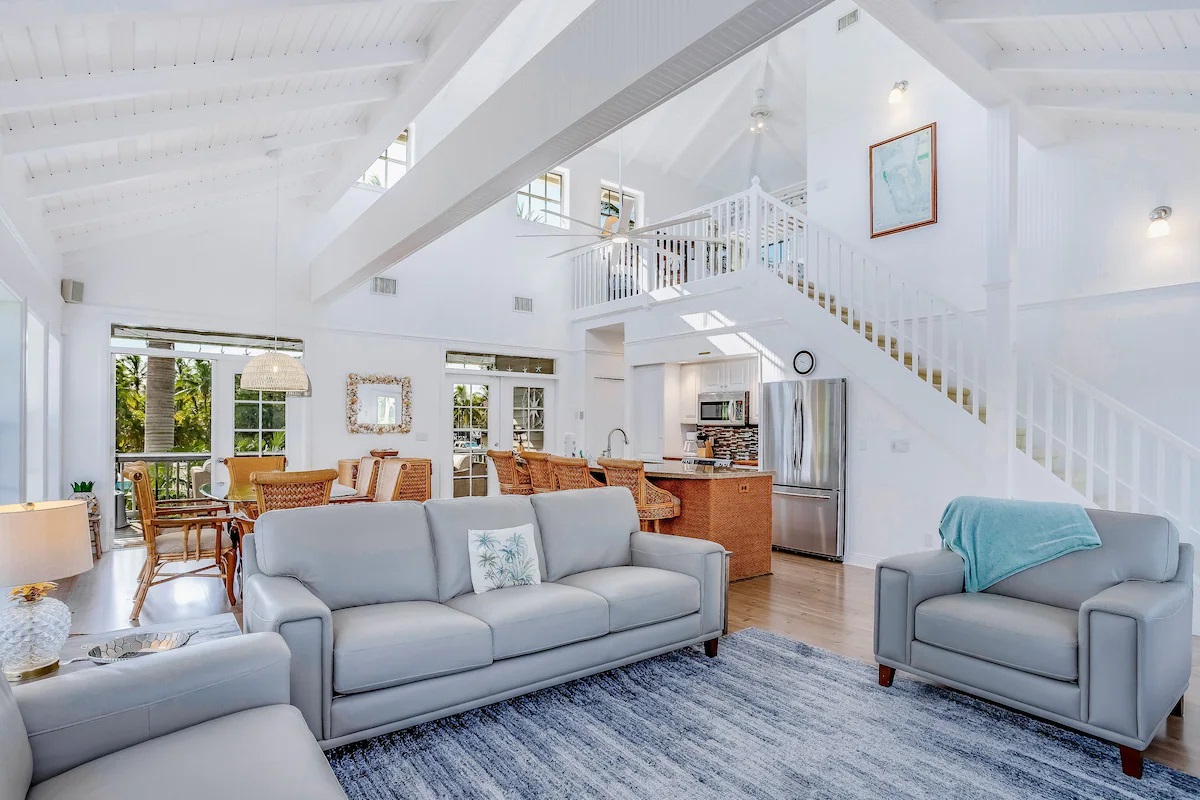
Bocilla Breeze is the only single-family cottage in the deluxe Bocilla Island Club in Bokeelia, Florida, on the north end of lovely Pine Island. You can get a taste of old Florida here, with high ceilings, walls of windows and french doors, and stylish Tommy Bahama coastal decor.

Also, it’s a home on stilts with three bedrooms, three bathrooms, and an open living area with a kitchen, island, dining hall, living room, and screened porch.

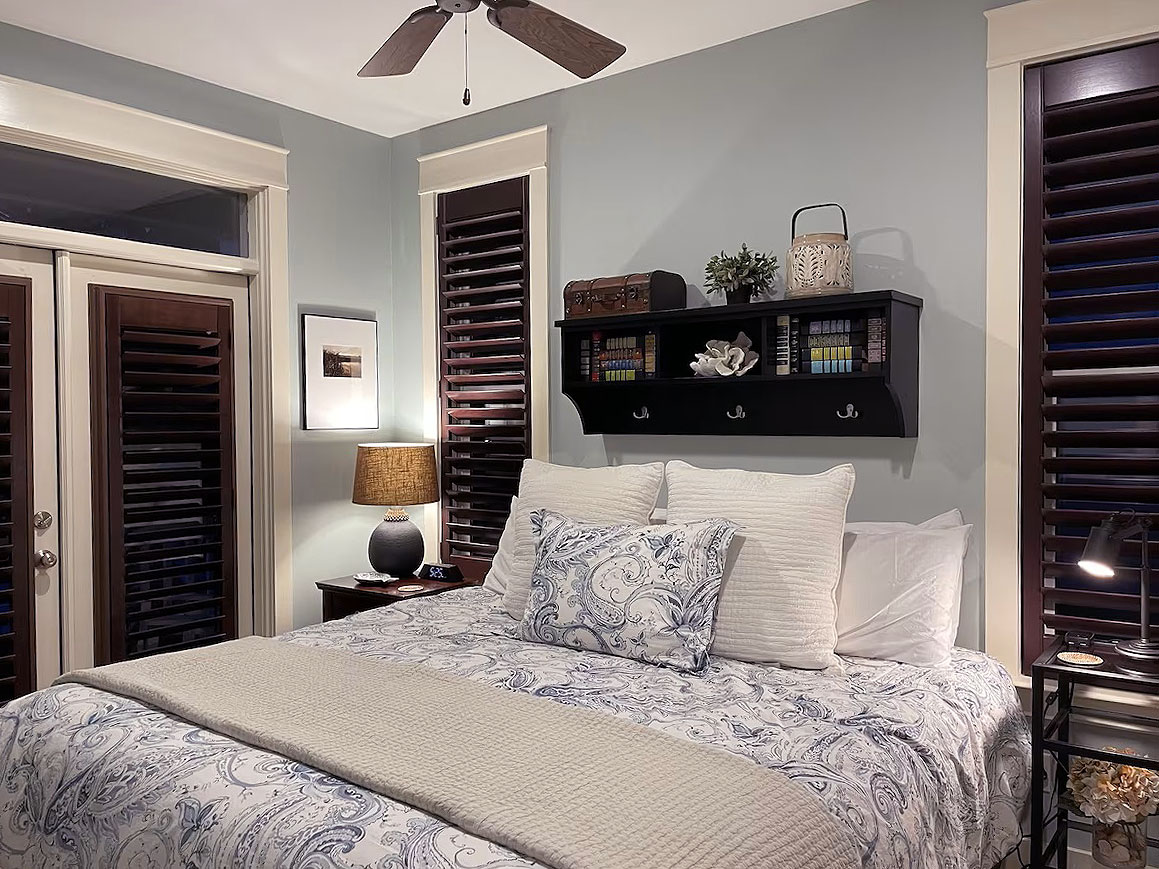
The main suite has a king-size bed, a vanity with two sinks, a walk-in shower, and a private commode. On the other hand, the guest bedroom has two twin beds that you can combine to make a king bed with the help of a very comfortable mattress topper.

You can access the marina canal from the back porch with a slip and a 10k-lb lift holding a 24′ fishing or pleasure boat. You can go fishing in Charlotte Harbor, Pine Island Sound, and the Gulf of Mexico in just a few minutes.

Moreover, Bocilla Island Club gives access to two pools, tennis courts, a shuffleboard, and a clubhouse. You can also step across the street onto the club’s 40-foot private pier in Charlotte Harbor to fish or relish spectacular sunsets while drinking a beverage and watching dolphins play.

Nearby, there are many excellent art galleries, boutiques, and fancy places to eat.

Above all, the Great Calusa Blueways Paddling Trails give you access to 190 miles of kayak trails, and there are daily nature cruises and shelling trips to Cayo Costa, Captiva, Boca Grande, and Sanibel.

Click here to book.

9. The Peacock Cottage

The best cabins in Florida to rent for a weekend | Airbnbs in Florida | The Peacock Cottage
vacationhomz.com

If you wish to escape to your little island, stay at The Peacock Cottage.

This cottage is ideal for people who want to relax and spend time alone. It’s hidden down a residential dirt road without traffic and surrounded by palm trees, pine trees, and mango orchards. It is also near Fort Myers and Sanibel, at the northernmost tip of Pine Island in Bokeelia.

Moreover, this Florida cracker-style house is an excellent place for a romantic trip for two people, but there is also a pull-out bed in the living room if you want to bring in more people. It has a kitchen, a dining room, a bathroom, and a bedroom with a queen bed.

This place has WIFI and both local and streaming TV that you can use. You can also use CDs, cassettes, LP records, and radio to listen to music while relaxing. What’s more, the house has central air conditioning and RO Water Filtration for drinkable water and ice, and your dog is welcome.

The best part is that it only takes two minutes to get to the local fishing ramp. The house is near restaurants, marinas, and boat ramps. You can even hop on a local ferry to get to Cayo Costa, Captiva, or Cabbage Key, all nearby islands.

Click here to book.

8. Riverfront Orlando Area Cabin

The best cabins in Florida to rent for a weekend | Airbnbs in Florida | Riverfront Orlando Area Cabin
booked.net

The Riverfront Orlando Area Cabin in Wekiwa State Park is among the best Florida cabins for family fun.

It can sleep six people (or seven if someone intends to sleep on the couch), and you can rent a separate bungalow for four more people. This cabin is very open and roomy, with a big deck with many places to sit.

You probably already know that Orlando has much to do, especially for families, so you won’t have difficulty finding things to do. Near this cabin, some of the best things you can do are fish, swim, hike, look for wildlife, and ride horses.

You can also kayak or canoe from Wekiwa Springs State Park to Rock Springs Run State Reserve, which is a brilliant experience. Three miles of kayaking will get you between these two gorgeous state parks, but you can go on kayaking trips that are between one mile to ten miles long.

Even better, this cabin is close to places like Disney, Universal, museums, natural springs, and forests.

So, you don’t need to look any further if you want the ideal spot to create memories and take pictures with your family on vacation.

Click here to book.

Related: 27 Best Restaurants in Orlando Florida

7. Red Bird Cabin

The best cabins in Florida to rent for a weekend | Airbnbs in Florida | Red Bird Cabin
vrbo.com

You should check out The Red Bird Cabin in Mayo, Florida if you want to rent a cabin in Florida to host a party. 

Red Bird Cabin is a great place to stay if you plan to go boating or have a cookout with all your associates. It is in a tiny village just west of Gainesville and south of Live Oak.

This cabin has three bedrooms and two bathrooms for six people. It is on 16 private acres, and the Suwannee River is just 450 yards away. Plus, the property is surrounded by giant oak trees, making it a great place to watch wildlife like deer, turkey, blue herons, and more.

With that, it is a great place to relax, whether on the front patios swings or in the screened-in sunroom. And, with a fire pit and grill, you can roast marshmallows or get warm at night.

Red Bird Cabin also ranks among the best places to go boating in Florida. The property has a private boat landing, and a public boat ramp is just 3 miles away.

You can go tubing on the Santa Fe River, the Ichetucknee Springs, or Bob’s River Place. All are easily reachable by boat. 

Do you want to try cave diving? The vicinity of the lodge serves as a starting point for cave diving.

Click here to book.

6. Lakefront Forest Getaway

The best cabins in Florida to rent for a weekend | Airbnbs in Florida | Lakefront Forest Getaway
vrbo.com

If you are searching for serene lakefront cabins in Florida, you should check out Lakefront Forest Getaway.

This rental was once a hunting cabin and a site for Sunday Bible gatherings. It is now a two-bedroom, one-bathroom A-frame cabin with all the comforts of home. 

A beautiful water view and a relaxing dock will welcome you here. And, to get to the bedroom, you have to climb up ladder stairs.

More so, the cabin has a canal that leads to Lake Kerr. From there, you can see sunsets and various wildlife, such as Sandhill cranes and birds. There is also a pleasant fire pit outside for your leisure.

If you are outdoorsy, this place is a terrific choice for a vacation because you can hike, fish, canoe, boat, and even water ski.

On top of that, you can explore a few Florida springs in the area, like Silver Springs or Salt Springs, which are just a short drive away!

Note that this cozy cabin can accommodate up to four people. And you are lucky because you can access great dining spaces too. Among the best include Odd Todd’s and Papa Joe’s Drive-in.

Click here to book.

5. Cozy For Two

The best cabins in Florida to rent for a weekend | Airbnbs in Florida | Cozy For Two
expedia.com

This next one is a 9-minute walk to Seacrest Beach in Panama City, Florida.

Cozy for Two is a one-bedroom cabin with one bathroom perfect for a couple’s getaway. This comfortable carriage house is separate from the primary home on the property so that guests can have complete privacy.

This cabin also has a full kitchen of granite countertops and a remodeled kitchen, a bedroom with a king-size pillow-top mattress, and two private decks.

Here, you can relish a cup of coffee or a wine glass from one of the rocking chairs on a covered patio or eat your food at the outdoor table.

Just a short walk away, you can experience the large community pool or walk along the tree-lined sidewalk toward the beach resort access point. There is even a small cafe by the pool where you can order food and drinks. 

Regarding biking trails, there are two bikes you can use for free, and you can ride your bike along the A1A area, where there are around 17 miles of bike paths.

On the other hand, Seacrest Beach North is right between the exclusive neighborhoods of Rosemary Beach and Alys Beach. It means that many Rosemary Beach restaurants and shops are within walking distance.

Lastly, if you go on Friday night, you can taste wine at multiple places. Take note of that!

Click here to book.

4. The Grey House

The best cabins in Florida to rent for a weekend | Airbnbs in Florida | The Grey House
vrbo.com

Next up is The Grey House. It’s perfect if you want to take your family on vacation to Florida and stay in a cabin.

The Grey House is an old cabin built in the 1900s and has just completed its renovation. This one-bedroom, one-bathroom cabin is on Sarasota Bay in Cortez, Florida, and it can sleep four people.

The cabin itself is just too cute for words. It has the original hard oak floors, bright white walls, and neutral colors. The kitchen and bathroom are up to date, and the kitchen has marble countertops. The bedroom has a king-size bed, and the sofa is available to pull out to make more space.

Moreover, the house has a large covered back deck and a dock that is 60 feet long. Both are great places to eat and watch the sun rise or set. Also, you can see real animals from the porch, like birds, fish, and dolphins swimming.

Even better, you can access fishing gear and kayaks to launch from the dock and paddle across the bay. But, if you want to bring your boat, you can rent a deep-water slip for an extra $35 per night.

Did we mention that this place is fantastic for couples? You and your partner will like the large bathrooms with a walk-in double shower. Or have some time together by going to Anna Maria Island beaches, enjoying Sarasota nightlife, and shopping at Siesta Key, which is all nearby.

Click here to book.

3. Smith House

The best cabins in Florida to rent for a weekend | Airbnbs in Florida | Smith House
vrbo.com

Check out The Smith House if you want to rent a cabin in Florida that is a quiet place for small families or friends to get away. It is in Grayton Beach on the panhandle of Florida, close to Seaside, one of the most beautiful small beach towns in Florida.

This two-bedroom, one-bathroom cabin is about 1300 square feet and can sleep up to five people. This iconic home first rose in 1925 and has been updated to have all the modern amenities guests could want.

With its vaulted ceilings and screened porch surrounded by old trees, this is the perfect place to escape it all.

A main suite features a queen bed, a double bunk bed with beds long enough for adults, and a large open-plan kitchen and living room with two full-sized couches. 

But the porch, which wraps around the home and contains an outdoor shower, dining table, daybed, and a grill and picnic table just outside the porch, is the true show-stopper.

Apart from that, the shed has three beach bikes, a beach wagon with chairs, an umbrella, a cooler, beach rafts, and beach toys. It has everything you need to have fun at the beach.

But remember that the hosts want you to stay at least seven nights during Spring Break and the summer. If you disagree or book not on those times, you must stay at least three nights.

Click here to book.

2. Blue Run Cabin

The best cabins in Florida to rent for a weekend | Airbnbs in Florida | Blue Run Cabin
vrbo.com

If beautiful Florida cabins with great views are at the top of your list, this Blue Run Cabin at Rainbow River is the perfect place for your next vacation. 

The Blue Run Cabin is in Dunnellon, Florida. It is right on Rainbow River, so that you can access one of Florida’s most naturally beautiful scenery from your window.

Moreover, the inside of this cabin is adorable. It has a rustic theme, with wood and stone accent walls and big windows in the bedroom that show off the setting of this cabin. Another upside is that the property is next to the Florida State Greenway, which makes it a peaceful and quiet place to live. But you can view wildlife from the house, like ducks, blue herons, otters, or even owls.

Regarding bedrooms, this property has two, with one being a loft with two beds that can sleep up to 4 people. It also has one bathroom and a large kitchen. 

There’s also an open-air deck with a grill and fire heater, a fire pit, a hammock near the river, a screened-in upper patio with a dining table, kayaks, tubes, masks, a screened-in hot tub, and more.

Seriously, this place has everything you would need. And guess what? People who want to rent for a long time are welcome.

Click here to book.

1. The Nature House

The best cabins in Florida to rent for a weekend | Airbnbs in Florida | The Nature House
vrbo.com

This next cabin is perfect if you want the ultimate getaway for the weekend in Florida.

The Nature House is a private cabin retreat next to a canal. From the backyard, you can get to the Withlacoochee River.

This cabin has a whole window wall, a cozy electric fireplace, a huge loft, a vast main suite, and two large bedrooms. It also has a full-sized kitchen, flat-screen TVs with Roku, DSL internet connection, and memory foam that will make you feel at ease.

Once you reserve this cabin, you will have plenty of room for four or five guests to spread out in the 1500 square feet living area.

The best thing about this spot is that you can get to several springs. The Citrus Blue Spring is only a few minutes from the house, and it only takes 30 minutes to drive to the Rainbow Springs.

Meanwhile, it takes 20 minutes to go to the Tsala Apopka Chain of Lakes and 40 minutes to move to the World Equestrian Center and HITS.

You’ll also be a half-hour drive from Hernando, Dunnellon, Ocala, and Crystal River, so it’s a terrific place to stay if you want a fantastic and insane experience.

At The Nature House, there is no restriction on the number of activities you can do.

Canoeing, spring hopping, bike trail riding, ATV trails, kayaking, fishing, horseback riding and shows, boating, and even swimming with manatees are some of the best things to do. 

Of course, you can also go there to take it easy and do nothing.

Click here to book.

Without a doubt, Florida’s cabins are the ideal spot for a getaway. These Florida cabins provide a once-in-a-lifetime experience, with everything from beautiful waterside hideaways to cozy forest retreats.

So, why not reserve one of these fantastic cabins? Get away from the world, relax in nature, and enjoy everything Florida offers. With beautiful views, modern amenities, and a quiet atmosphere, these insanely cool cabins in Florida you can rent for a weekend are the perfect place to get the relaxation we deserve!

Visiting Acadia National Park In Winter: The Ultimate Guide

Visiting Acadia National Park in the winter means fewer tourists, more parking, and the chance to explore Maine’s natural beauty beneath a gorgeous snowy cover.

But visiting Acadia in the winter can be challenging because (duh) it’s Maine, so we’ve put together this guide to help you make the most of your time.

What to Know Before Visiting Acadia in Winter?

Acadia national park in winter

Things do slow down during the winter months in Acadia. During the winter in Bar Harbor, many businesses, including hotels, are closed.

Acadia National Park will also begin its winter hours and shut key hiking routes and portions of Park Loop Road in December.

However, this allows space for snowshoeing and cross-country skiing enthusiasts! And as long as you know when and where to go, visiting Acadia National Park in the winter can be a really awesome and unique experience.

Reasons to Visit Acadia in Winter:

Acadia National Park in Maine is far less congested during the winter months. If you don’t mind cold weather, you may be able to enjoy the park all to yourself (as long as you’re dressed adequately).

Acadia’s spectacular snowshoeing and cross-country skiing trails are another incentive to spend the winter there.

There are plenty of trails in Acadia (almost 45 miles of carriage roads) and it is a lovely destination in winter for people wishing to appreciate the outdoors in a gorgeous environment. During February and other winter months, it is one of the most incredible places in the US to visit or to engage in winter sports.

When Is Considered Winter In Acadia?

Acadia national park in winter

Acadia’s winters are notoriously lengthy. The end of October through April or May are possible starting points, but it all depends on the year. Classic “winter” at Acadia National Park is most common in December, January, and February, lasting far into March.

Does Acadia National Park Get Snow?

It snows at Acadia National Park, and the amount varies depending on the month. Acadia National Park receives around 60 inches of snow on average.

How to Get to Acadia National Park?

To access Acadia National Park, you can travel to Boston Logan International Airport and get a direct flight to Hancock County–Bar Harbor Airport, provided by Cape Air, Silver Airways, JetBlue, and United Airlines, a short 10-minute drive from the park.

Your trip goes along Maine’s Coastal Route 1, which passes through several of the state’s most scenic coastal communities.

It takes roughly an hour to drive inland from Mount Desert Island to Bangor International Airport. But, only a tiny handful of airlines fly into this airport, including Allegiant, American, Delta, and United.

Portland International Jetport is still another choice, particularly if you wish to tour Portland additionally. Acadia National Park is within a three-hour drive south of this airport. Airlines servicing this airport include American, Delta, Frontier, JetBlue, Southwest, and United.

You’ll need a vehicle to go around Acadia National Park, whether you fly into Boston, Bangor, or Portland.

Where to Stay in Acadia National Park In Winter

Acadia national park in winter

There are several good lodging options in and near Acadia National Park. We’ll give you some of our favorite hotels, Airbnb, and camping/glamping recommendations in and around Acadia.

One of the famous lodging options in the park is Bar Harbor Hotels and Inns. However, hotels and restaurants shut-in Bar Harbor during the winter months. Thus, we recommend the following top-rated establishments that remain open and eager for business!

  • Quimby House Inn & Spa
  • Atlantic Oceanside Hotel
  • Saltair Inn

Airbnbs in and Nearby Acadia National Park

Acadia National Park and Bar Harbor are home to several fantastic Airbnbs, but here are a few of our favorites:

  • The Seamist Cottage
  • Coyote’s Den at the Howling Woods
  • Hulls Cove Cottage in Bar Harbor
  • Little Frog at the Howling Woods

Winter Glamping and Camping Near Acadia

There are four campsites inside Acadia, but online reservations are not available. These are the:

  • Schoodic Woods Campground
  • Seawall Campground
  • Blackwoods Campground
  • Duck Harbor Campground

If you plan to camp in Acadia during the winter, these campsites are still available and near the park.

  • Connors Family Compound
  • The Howling Woods
  • Schoodic Woods near Ocean
  • Off-grid Oceanfront Acadia A-frame

Best Things to Do in Acadia During Winter

Acadia National Park in winter can be one of your best options if you want to enjoy a full-fledged winter tourist experience.

During the winter, there is less traffic than in the summer. There are a variety of exciting activities such as designated drives, cross-country skiing, snowshoeing, snowmobiling, birding, winter camping, and picturesque hiking sites.

Here are the best things to do in Acadia during winter:

Ocean Drive

Acadia national park in winter

Except for Ocean Drive and Jordan Pond Road, Park Loop Road closes on December 1st.

This trip will take you to some of the park’s most popular attractions, including Thunder Hole, Sand Beach, the Beehive, and other majestic cliffs.

Schooner Head Road leads to a tiny stretch of Acadia’s Loop Road. Snowmobiles only have access to the left side of the road, thus remaining in the right lane.

You can get off the Ocean Drive and onto Route 3 through Otter Cliff Road.

Snowshoeing

Individuals who prefer snowshoeing have an excellent opportunity to spend their time on six trails out of 120 miles of hiking terrain.

Gorham Mountain, which is 525 feet, is one of the six trails and has several breathtaking natural landscapes. The moderate slope of the cliff makes it an ideal spot for snowshoeing.

Cadillac South Ridge has an even gentler slope than Gorham and is the longest path at 3.5 miles.

Ship Harbor and Wonderland are better options for inexperienced hikers due to their length (about 1.5 miles), but they are also renowned for breathtaking ocean views. Choose the Day Mountain Trail if you wish to walk a carriage road that continues to the summit.

It is accessible through Jordan Pond and Seal Harbor to the south.

Last but not least, the alternative 6-mile path of Witch Hole Pond has one of the wildest auras in the area, but along this route, you will be able to witness the Duck Brook Bridge and Paradise Hill, both of which are well worth the time and effort spent on the trip.

Hiking Cadillac North Ridge Trail

Cadillac North Ridge Trail is a 6.4-kilometer out-and-back trail situated in Bar Harbor that gains 341 meters in height. This trail is suitable for hikers who like seeing the dawn or sunset.

It provides a variety of exercise opportunities accessible throughout the year, and it’s worth noting that it has the enticing beauty of nature. On these trails, dogs are permitted but must remain on a leash.

The hikers have two alternatives from Park Loop Road to begin their journey.

The first option begins at the Take Kebo Brook Trail intersection and the Cadillac North Ridge Trail, while the second option begins at the one-way stretch leading to Sand Beach. Please be aware that there is no parking at all at this location.

Snowmobiling

It’s vital to note that you can only do snowmobiling on unplowed highways, including the 27-mile Park Loop Road. The maximum speed allowed is 35 miles per hour. The park’s winter activities website has all of the rules and restrictions.

If there is enough snow, people can drive snowmobiles in the park. During excellent weather, a portion of the road remains open to offer free access to tourists of Thunder Hole, Sand Beach, and Otter Cliffs.

Hiking Pemetic Mountain

Acadia national park in winter

If you want a hike that includes both easy treks and challenging ascents while still taking in the beauty of the terrain, Pemetic Mountain should be at the top of your Acadia bucket list.

The mountain is 1,248 feet tall (380m). The hike’s difficulty level is “advanced,” so we don’t think it will be easy.

Native Americans gave the peak its name, which translates to “sloping land” and accurately defines the whole island. The region is accessible from the north (Cadillac Mountain, Bar Harbor, etc.) and the south (Mt. Desert Island).

If you’re an experienced hiker, you should know that when you reach the top, you’ll be able to see Jordan Pond, Bubble Pond, Little and Great Cranberry Islands, and many other places as clearly as if you were holding them in your hand.

If you like the outdoors and are adequately dressed, hiking in Acadia in the winter is one of the most remarkable activities.

Jordan Pond

Acadia national park in winter

Jordan Pond might have a few ice fishing shacks. The pond is accessible throughout the winter via the Park Loop Road, which ends at the Jordan Pond House Restaurant, and is known for an ample supply of landlocked salmon and lake trout, making it an ideal site to cast a line. Although the restaurant is closed during the winter, the views of Jordan Pond are breathtaking.

The routes around Jordan Pond will have your pulse racing and your lungs filled with fresh mountain air. Prepare yourself before embarking on the 3.4-mile Jordan Pond Full Loop Trail. In the summer, it’s a moderate level, and in the winter, it’s a great step up from intermediate.

Hiking Carriage Roads

The carriage roads are ideal for hiking, cross-country skiing, and snowshoeing since they are wide and level. The Carriage Roads are the core of Acadia’s winter wonderland, with 45 miles of groomed tracks and ungroomed regions.

Make sure you have crampons on hand for any winter hiking. Hiking poles will help maintain balance. When hiking, stay to one side of the groomed cross-country routes to avoid cutting into the ski lanes.

The spacious meadows and mild slopes of the carriage roads will appeal to cross-country skiers. The thrilling ride along the picture-perfect tree-lined pathways is terrific.

Cross-Country Skiing

Friend of Acadia volunteers and the Acadia Winter Trails Association groom and track the region if there are at least 6 inches of snow and the road is frozen, allowing cross-country skiers to enjoy the park during the winter fully.

The grooming process utilizes cutting-edge technology. There are 45 miles of carriage roads, 32 maintained, and include skate lanes.

Check the cross-country skiing conditions before going since they are not always consistent and often vary.

Waterfall Climbing

Ice climbing is a fantastic winter task. The Acadia Mountain Guides Climbing School is eager to teach you how to climb securely and enjoyably.

Their professional guides will teach you the fundamentals of waterfall climbing in an introductory ice climbing program. They also provide half-day and full-day climbs that will put your abilities to the test while pumping your adrenaline.

This excursion is perfect for those seeking that one-of-a-kind, Instagrammable experience.

Birdwatching at Schoodic Point

Acadia national park in winter

Birdwatchers flock to Schoodic Point in particular. Visitors to Acadia National Park may join a guided tour to learn about the park’s distinctive bird species.

Examples include eagles, owls, razorbills, murres and dovekies, black-capped chickadees, and Harlequin ducks. The Schoodic Peninsula is about an hour’s drive from Mount Desert Island’s Hulls Cove Visitor Center.

The Frazer Point Picnic Spot, featuring a picnic area, is located immediately after entering the park, followed by the one-way route to Schoodic Point.

You can enjoy the splendor of the vistas along the route and visit Mount Desert Island on your way to the destination.

Exploring the Eagle Lake

The Eagle Lake Circuit is a 6-mile-long circuit that offers one of the most breathtaking experiences in the park. To acquire the best perspective, you can reach the ice and take in the scenery.

With a view of the lake, mountains, and trees, Eagle Lake is one of the park’s most spectacular places. The hike to the lake isn’t tricky; there are a few ups and downs.

The west side of the lake’s 3.7-mile route is maintained and bordered by carriage roads.

Those who prefer a smoother and flatter approach can ski the lake itself when the lake is frozen in the winter.

Witnessing The Sunrise On Cadillac Mountain Summit

Acadia national park in winter

Cadillac Mountain’s peak is the first place in the nation to watch the dawn between October and early March. The sun’s first rays shine brightly over the Gulf of Maine, Frenchman Bay, and Bar Harbor, displacing the drab morning light. During the winter, you can watch the event from the privacy of your own home.

Typically, you’d drive up Cadillac Mountain to reach the peak, but during the winter, it’s closed. Make the 3.5-mile journey on foot, skis, snowshoes, or even a skimobile if you’re a brave walker.

The morning is spectacular, but you’ll notice that other hikers have arrived for their “first break” when the light shifts and the stars disappear. If you decide to go, be aware that the peak will have a minimum of a 20-degree plunge.

Bass Harbor Head Lighthouse

Acadia national park in winter

On Mount Desert Island, the Bass Harbor Head Lighthouse is accessible by car. The Bass Head Harbor Light Station is positioned on Maine’s famously rugged shoreline. The Lighthouse offers a spectacular picture of Bass Harbor and Blue Hill Bay while safeguarding seafaring boats from the rocky terrain.

Thunder Hole

Thunder Hole is a semi-submerged cave that resounds like thunder an hour or two before high tide. The waves pounding against the cliffs are visible and audible from the viewing platform. The path down to the caverns is slick and needs considerable agility during the warmer months. It’s particularly hazardous in the winter. The vistas, though, make it worthwhile to pause.

Seafood From The East Coast

The daily catch in Maine is seafood, especially Maine lobster. At Peekytoe Provision, you can order a Local Lobster Roll on a toasted split-top bun with mayo or sautéed in butter. Try the Fresh Haddock Sandwich on a Challah bread with avocado or bacon as an alternative. Order your Lobstah roll with a New England accent to mix with the locals.

What to Pack for Winter Trip in Acadia National Park?

The most challenging element of packing is choosing the correct clothing, but you must also consider other items. Here are some things we usually bring with us when we go to cold regions in the winter.

Hiking Boots: These are the way to choose if you want comfort on your trip

Socks: Socks are also essential for convenience while exploring.

Hiking Backpack:  For weekend trips, we usually bring a hiking backpack. It makes a significant difference to have it since we can get food, clothing, and whatever else we need on our adventures.

Water Bottles: It’s critical to carry adequate water, whether hiking or simply exploring!

Mobile Power Bank: Weather will drain your phone’s battery. Bring a mobile power bank so you can take pictures anytime you want!

Extra Camera Batteries: If you like photography but have never attempted it in a freezing environment, you’ll want to pack additional batteries. Like phone batteries, the camera battery drains faster in cold weather. We also carry a USB charger for camera batteries in our mobile power bank in case of need.

Dry Bags: Some days during your winter trip to Acadia will be snowy and cold, so don’t destroy your stuff!

Where to Eat During Winter in Acadia National Park?

Here are the two establishments you should visit for some delicious food for your winter trip to Acadia National Park

Havana

For 20 years, Havana has been dishing up American food with a Latin twist. The restaurant in Bar Harbor is noted for its local and organic meat, fish, and vegetables. It also offers an extensive wine selection, especially in the off-season.

Choco-Latte Café

Chef-owned Choco-Latte Cafe serves fresh-baked goodies, sandwiches, and locally-roasted coffee. The cafe’s walls are covered with vibrant artwork from Maine and New England artists. It’s open from 7 a.m. to 6 p.m. all year.

Tips for Visiting Acadia National Park in the Winter

Acadia national park in winter

Acadia National Park is no exception to Maine’s winter enchantment. If you visited during the busy summer months, you might not recognize it; popular places during the summer are frequently shockingly silent during the winter.

Here are some tips for making the most of your visit to Acadia National Park during the winter.

What’s Open and What Isn’t

Off-season access to several of Acadia’s most famous sites is limited. Park Loop Road is closed from December until early April except for the stretch between Sand Beach and Otter Cliff Road; Park Loop Road is closed from December until early April. (Winter weather may prolong its closure.) It includes the Cadillac Mountain road.

Many businesses in neighboring Bar Harbor are also shuttered for the winter. While year-round shops in this Maine small town will still carry staples, you won’t have the same shopping possibilities as in the summer!

Many fantastic hikes await daring hikers, mainly when the ground is bare. Acadia’s services, including most restrooms, are unavailable in the winter. Know your limitations, and don’t push yourself too far.

The Shuttle Ceases in October

From late June through mid-October, the Island Explorer operates. You will need a vehicle to visit Acadia National Park in the winter since it does not provide services.

Never Forget To Leave No Trace

It’s critical to pack away everything you brought in and not leave any rubbish behind. You can quickly dispose of your waste at some locations, including trash containers. You can dispose of your waste at a local gas station or convenience shop if they do not have trash containers.

Remember to Purchase Travel Insurance

Travel Insurance Master looks at your insurance choices and finds the best fit for you! All you have to do now is plan your getaway!

Prepare for a Winter Acadia Visit

Maine’s winters are famous. It’s crucial to plan your activities around the weather. Maine’s weather is unpredictable and might catch you by surprise.

Spend a lot of time outside? Layer up! Remember that Acadia National Park has intermittent mobile phone connections, so notify someone of your intentions ahead of time.

FAQs About Visiting Acadia National Park In Winter:

What are the main attractions to explore & activities to do in Acadia National Park in winter?

A winter visit to Acadia National Park opens the door to a variety of captivating activities that allow you to engage with the park’s natural wonders in a whole new way. One of the most popular pursuits is snowshoeing, an exhilarating experience that lets you traverse snow-covered trails and explore hidden corners of the park that might be inaccessible during other seasons. As you navigate through the serene landscape, you’ll have the chance to witness stunning vistas, discover frozen waterfalls, and encounter wildlife that’s adapted to the winter conditions.

Cross-country skiing is another fantastic option for immersing yourself in Acadia’s winter charm. The park’s carriage roads, with their gently rolling terrain and sweeping views, transform into a winter playground for skiers. Glide through the tranquil forest, taking in the sight of snow-draped trees and pristine lakes, while enjoying the cardiovascular workout that skiing provides.

If you’re seeking a more leisurely activity, winter photography in Acadia is a rewarding pursuit. The park’s natural beauty takes on a new dimension when cloaked in snow, and the interplay of light and shadow creates captivating scenes for photographers to capture. From the iconic silhouette of the Bass Harbor Head Lighthouse against a snowy backdrop to the intricate patterns formed by frost on plant life, Acadia’s winter landscape provides ample opportunities for creative expression.

Can I drive along the Park Loop Road in winter?

While most of the Park Loop Road is closed during winter due to snow and ice, the section from the entrance station to Otter Cliff Road remains open year-round, providing access to some beautiful coastal views.

Are there guided tours or ranger programs in the winter?

While ranger programs are limited during the winter months, the park occasionally offers guided snowshoe hikes and talks. Check the official Acadia National Park website for the latest information on winter programs.

Can I go wildlife watching during the winter months?

Yes, winter can be an excellent time for wildlife watching in Acadia. Keep an eye out for deer, squirrels, and even snowy owls. Remember to maintain a respectful distance and avoid disturbing the animals.

What makes Acadia National Park special in the winter?

The tranquility and unique beauty of Acadia in winter are truly captivating. The peacefulness of the snow-covered landscapes, the crisp air, and the chance to experience the park in its quieter state make winter visits a memorable and rewarding experience.

How’s the weather during the winter in Acadia National Park?

The winter weather in Acadia National Park creates a captivating and ever-changing landscape that’s a world away from the bustling summer crowds. From December through February, the park experiences a true New England winter, characterized by cold temperatures, snowfall, and occasional storms. This seasonal transformation blankets the park in a serene and magical aura, offering a unique and enchanting experience for visitors.

Temperature: During the winter months, temperatures in Acadia National Park typically range from the mid-teens to mid-30s Fahrenheit (-9°C to 1°C), although they can occasionally drop even lower. It’s important to dress warmly in layers, including insulated clothing, waterproof outerwear, gloves, and a hat to stay comfortable while exploring the park.

Snowfall: Snowfall is a defining feature of Acadia’s winter climate. The park receives an average of around 61 inches (155 cm) of snow annually, covering its trails, mountains, and forests in a pristine blanket of white. The snow creates a picturesque setting that’s perfect for winter sports and photography.

Winter Storms: Winter storms are not uncommon in Acadia, and they can add an extra layer of drama to the landscape. Snowstorms can bring heavy snowfall, strong winds, and challenging conditions for outdoor activities. However, they also offer a chance to witness the park in a beautifully wild state, with snow-draped trees and cliffs.

Icy Conditions: With the freezing temperatures, trails and pathways can become icy and slippery. It’s essential to exercise caution while hiking and exploring, and it’s recommended to use appropriate footwear with good traction, such as crampons or ice cleats, to prevent accidents.

Changing Weather: The weather in Acadia National Park during the winter can be unpredictable, with rapid changes from clear, sunny days to overcast skies and snowfall. Checking the weather forecast before heading out and being prepared for changing conditions is crucial to ensure a safe and enjoyable visit.

Benefits of Winter Weather: Despite the challenges, the winter weather in Acadia offers a unique and quieter experience compared to the bustling summer months. The tranquility of the snow-covered landscapes, the crispness of the air, and the absence of large crowds create an atmosphere of serenity and solitude. It’s a time to connect with nature on a more intimate level, to hear the crunch of snow underfoot, and to appreciate the park’s natural beauty in a different light.

How do I prepare for a winter hike in Acadia National Park?

Winter hiking in Acadia National Park offers a unique and invigorating experience, but it also requires careful preparation to ensure your safety and enjoyment. First and foremost, dressing appropriately is crucial. Layering is key to regulating your body temperature, so start with a moisture-wicking base layer to keep sweat away from your skin. Add an insulating layer to retain body heat, and finish with a waterproof and windproof outer layer to protect against the elements. Don’t forget to wear warm gloves, a hat, and sturdy waterproof boots with good traction to navigate icy trails.

Before embarking on your hike, it’s essential to check the weather forecast and trail conditions. Winter weather can be unpredictable, so being informed about any incoming storms or rapidly changing conditions is vital. Make sure to bring essential items like a map, compass, headlamp, and a fully charged cell phone, as daylight hours are shorter during winter.

Safety should always be a top priority, so let someone know your hiking plans, including your intended route and estimated return time. It’s a good idea to hike with a companion whenever possible, as having a partner can provide assistance in case of emergencies. Lastly, be flexible with your plans. Winter conditions can sometimes lead to unexpected trail closures or challenging circumstances, so having a backup plan or being willing to adjust your itinerary ensures a safe and enjoyable hiking experience in Acadia’s winter wonderland.

What are the benefits of experiencing Acadia National Park in the winter compared to other seasons?

Experiencing Acadia National Park during the winter offers a distinct and captivating perspective that sets it apart from the more bustling seasons. While summer draws large crowds seeking warm weather and vibrant landscapes, the winter months provide a tranquil and serene ambiance that allows for a deeper connection with nature.

One of the most notable benefits of a winter visit is the opportunity for solitude and introspection. The park’s trails, which may be crowded in the summer, often become quiet pathways for introspective exploration. The hush of falling snow, the crunch of your footsteps on the trail, and the absence of bustling crowds create a serene environment that encourages mindfulness and reflection.

Photographers and artists also find inspiration in Acadia’s winter landscapes. The interplay of sunlight on snow, frost-covered vegetation, and the striking contrast of dark evergreen trees against the white backdrop offer endless creative possibilities. Whether you’re an amateur photographer or a seasoned artist, the winter scenery invites you to capture its beauty in unique and captivating ways.

Moreover, experiencing Acadia’s iconic landmarks, such as Cadillac Mountain and Jordan Pond, under a blanket of snow provides a new perspective on their grandeur. The transformation of these familiar sights adds an element of novelty and intrigue, even for those who have visited during other seasons.

In conclusion, the benefits of experiencing Acadia National Park in the winter extend beyond the surface beauty of snow-covered landscapes. The solitude, creative inspiration, and unique perspective offered during this quieter time of year make a winter visit a truly memorable and enriching experience for nature enthusiasts, adventurers, and anyone seeking a deeper connection with the natural world.

What safety measures should I take when exploring Acadia National Park in winter?

Exploring Acadia National Park in winter offers a serene and enchanting experience, but it’s important to prioritize safety to ensure a memorable and trouble-free adventure. The winter environment can present unique challenges, so here are some essential safety measures to keep in mind:

1. Check the Weather: Before heading out, always check the weather forecast for the park. Winter weather can be unpredictable, and conditions can change rapidly. Make informed decisions based on the forecast and be prepared for cold temperatures, snowfall, and potential storms.

2. Dress Appropriately: Layering is essential to stay warm and dry during winter outings. Dress in moisture-wicking base layers, insulating clothing, and waterproof outerwear. Don’t forget warm gloves, a hat, and insulated, waterproof boots with good traction. Dressing in layers allows you to regulate your body temperature as you move.

3. Trail Conditions: Be aware of the trail conditions before setting out on a hike or snowshoeing adventure. Snow and ice can make trails slippery and challenging to navigate. Carry traction devices such as crampons or ice cleats to improve grip and stability, especially on steep or icy terrain.

4. Inform Someone of Your Plans: Always let someone know your itinerary and estimated return time. This is crucial in case of an emergency. If you’re going solo, consider sharing your plans with a friend or family member, and carry a map or GPS device.

5. Daylight Hours: Winter days are shorter, and it gets dark earlier. Plan your activities with the available daylight in mind to avoid being caught out after dark. Starting your outdoor excursions earlier in the day gives you ample time to enjoy the park safely.

6. Stay Hydrated and Nourished: Even in colder temperatures, staying hydrated is important. Carry enough water and energy-rich snacks to keep your energy levels up. High-energy foods like nuts, trail mix, and energy bars can provide a quick boost and help maintain body heat.

7. Wildlife Awareness: While wildlife sightings can be exciting, remember to keep a safe distance. Animals are adapted to winter conditions and may be more focused on conserving energy. Maintain a respectful distance to avoid stressing the animals or putting yourself at risk.

8. Be Prepared: Pack essential items such as a map, compass, headlamp with extra batteries, a fully charged cell phone, and a basic first aid kit. These tools can be invaluable in case of unexpected situations or emergencies.

9. Know Your Limits: Winter conditions can be physically demanding. Choose trails and activities that match your skill level and physical fitness. Pushing yourself too hard in challenging conditions can lead to exhaustion or injury.

10. Respect Closures: Some areas of the park, including certain trails and facilities, may be closed during the winter season. Respect these closures for your safety and to help protect the park’s natural resources.

By taking these safety measures, you can fully enjoy the serene beauty of Acadia National Park in winter while minimizing risks and ensuring a safe and memorable experience.

11 Incredible State Parks In The Florida Keys

Is siesta time what you’ve been craving, or how about a breath-taking deep-sea excursion? If you’re heading to southern Florida, then the beautiful Florida Keys State Parks should be on your must-see list, regardless of whether you want to snooze or scuba dive. There’s something for everyone!
The Florida Keys are a chain of subtropical islands between the Gulf of Mexico and the Atlantic Ocean about 125 miles west of Florida. And there’s so much to do in the Keys!
There are 11 State Parks (most only knew ten) located in the Florida Keys you can have tons of fun at. Each has its beauty and vast landscape. Getting some peace in any of these state parks is simple, but there are plenty of opportunities for outdoor adventure, too.

Do you want to relax in the shade with a book? Or take a deep breath and experience an underwater theme park? With this comprehensive guide to the most incredible State Parks in the Florida Keys, you’ll be able to pack it all in.

Here are the 11 best State Parks in the Florida Keys that you definitely won’t want to miss.

11. Dagny Johnson Key Largo Hammock Botanical State Park

Location: Key Largo | Entry Cost: $2.50 per person | Vibe: Tropical, woodsy, secluded

The best state parks in the Florida Keys including state parks in Key West and other Florida Keys state parks

On County Road 905, about half a mile north of Mile Marker 106 on U.S. Highway 1, you’ll find Dagny Johnson Key Largo Hammock Botanical State Park.

It boasts one of the most oversized West Indian tropical hardwood hammocks in the United States. It contains almost 6 miles of shaded and typically paved pathways accessible to bikes and wheelchair users.

This 2,500 acres State Park is home to 84 endangered species, and a self-guided nature walk has signage with information on the park’s habitat and species.

A short paved walking/biking track leads to the main public area of the habitat, where you can see breeding populations of Black-whiskered Vireos, Mangrove Cuckoos, and White-crowned Pigeons. During spring and fall migration, you can witness 20+ species of wood-warblers.

Look for Ruddy Daggerwings and Zebra Longwings fluttering through the hammocks if you’re interested in butterfly watching. There are some seriously gorgeous species of butterflies at this state park!

After getting a free backcountry pass, you can access an extra 4 miles of paved routes and off-trail options (at the neighboring John D. Pennekamp State Park). Brown-crested Flycatcher, La Sagra’s Flycatcher, Thick-billed Vireo, and Zenaida Dove are just a few of the rare species found here – you’ll see lots of wildlife if you choose to hike.

You will also find a picnic area and bathrooms on-site for additional convenience. We advise using insect protection and long sleeves and trousers since mosquitoes are prevalent here, especially during summer.

This is one of our favorite State Parks in the Florida Keys because it offers an exclusive up-close experience with nature but the hike isn’t too aggressive.

10. Bahia Honda State Park

Location: Big Pine Key | Entry Cost: $8 per vehicle | Vibe: Beachy, great for camping

The best state parks in the Florida Keys including state parks in Key West and other Florida Keys state parks

Where else can you immerse yourself in nature while learning about the region’s rich history? Visitors to Bahia Honda State Park can participate in various activities. This award-winning beach, named by Spanish explorers centuries ago, is a draw for historical lovers and environmental enthusiasts alike as well as anyone who just wants to lay on the sand.

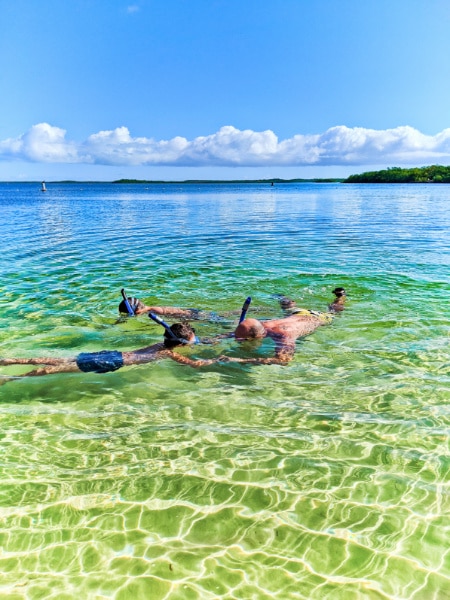
Sand and sea enthusiasts will delight at the 500-acre Bahia Honda State Park, which has powdery white beaches, crystal-clear seas, and awe-inspiring sunsets. You can have close-up views of vibrant coral and exotic fish when you snorkel or kayak here. To gain a bird’s eye perspective of the lake below, climb the century-old original trestle railroad construction.

There is also much history associated with the Bahia Honda Bridge because it was one of the most challenging to construct in the region. This bridge has had its fair share of difficulties, from dealing with uneven ground to being battered by big storms.

The best state parks in the Florida Keys including state parks in Key West and other Florida Keys state parks

If you like, take a walk in the woods to see the local species and flowers. Alternatively, you can take the Overseas Highway to Big Pine Key, where you can dive and snorkel in some of the most excellent reefs in the Florida Keys.

To conclude the day, return to Bahia Honda and pull up a piece of the sand on the shore. Let yourself be lulled to sleep by one of South Florida’s most spectacular star-studded sky while you relax on the white-sand beaches.

No matter what time of year you visit, you’re guaranteed to have a good time with your family here. Bring sunscreen and sunglasses, and don’t forget your outerwear. You can choose between a cabin, an R.V. site with electricity and water, or a tent site at the park. Bahia Honda is a great place to relax and enjoy the warm weather all year round.

If you’re planning to visit any of the State Parks in the Florida Keys then I definitely recommend Bahia Honda. It’s just so beautiful and has the true “Keys” beachy vibe while offering a bunch of nature experiences.

9. Curry Hammock State Park

Location: Marathon | Entry Cost: $4.50 per person | Vibe: Undeveloped, lush forest

The best state parks in the Florida Keys including state parks in Key West and other Florida Keys state parks

Are you in search of a unique experience? Curry Hammock State Park is a well-kept secret. This 1,000-acre park is the most significant uninhabited area between Big Pine Key and Key Largo set aside for preservation. Tourists seeking a genuinely “natural” experience in the Florida Keys love the park’s peaceful island environment and abundance of wildlife.

You can see mangrove tunnels, deep water lagoons, the open ocean, and grassland flats while hiking the nature route.

You can also explore vast Florida Keys mangrove wetlands, tropical hammocks, and seagrass beds, or get out on the water and try your hand at kayaking, paddleboarding, or even snorkeling. Set out a line and see what it takes.

Take flight like a kite if you want to take things a step further. Take to the water on a kite-powered board and enjoy the emerald green waters of Florida Bay. Kite-flying is also a great way to unwind at Curry Hammock, and is a tremendously popular pastime in this area.

The park also consists of a collection of islands in the Middle Keys, with public access to swimming, picnic tables, playground, grills, and showers on the ocean side of Little Crawl Key.

Each year, a 28-site campsite along the seashore is available from November 1 to May 31. A dump station and water and power connections are accessible to all campers at any campground’s 28 sites.

When planning a winter camping trip here, book early to avoid disappointment. It fills up quickly! This is definitely one of the more popular State Parks in the Florida Keys for campers who want to experience true untouched nature.

8. Indian Key Historic State Park

Location: Islamorada | Entry Cost: $2.50 per person | Vibe: Exclusive island living

The best state parks in the Florida Keys including state parks in Key West and other Florida Keys state parks

Are you drawn to less-trodden paths? Indian Key Historic Park is at mile marker 78.5 off the coast of Islamorada. You can only reach this eight-acre island by boat, either hired or owned.

The Florida Keys shoreline, which has been the location of innumerable maritime tragedies throughout the years, gave rise to the profitable profession of cargo salvaging. In the early 1800s, Indian Key was crowned “Wrecker King” of the Florida Keys by Jacob Housman. However, the island’s prosperous civilization was destroyed by the catastrophic storm of 1935.

Indian Key, a fascinating ghost town, is defined with unsettling reminders of the community’s history. You’ll sense their presence as you traverse the streets and examine the remains of old structures. Learn about one of the most intriguing footnotes in Florida Keys history on a self-guided educational tour that culminates in an ascent to the observation tower.

Indulge in various water-based activities such as kayaking or swimming at this remote location. Fishing is also huge at this Florida Keys State Park.

Bonefish on the flats and Tarpon in the channels are just a few of the many species available to anglers. You can also catch Snook, Snapper, and Spanish Mackerel in the area.

Because of the nearby small grass flats, understanding the waterways is essential. Most flats can be traversed by kayaks or canoes, allowing visitors to witness a wide range of marine species, including dolphins, manatees, sharks, and rays. Robbie’s Marina and other nearby marinas hire out powerboats and kayaks to visitors.

You can snorkel at Indian Key, but all snorkeling must take place at least 100 feet away from the dock at all times. Remember that a diver down flag is a must for any snorkeling activities.

If you want to get that exclusive, private island vibe while still experience tropical nature, then this will be one of your favorite State Parks in the Florida Keys.

7. Lignumvitae Key Botanical State Park

Location: Islamorada | Entry Cost: $2.50 per person | Vibe: Exclusive island living

The best state parks in the Florida Keys including state parks in Key West and other Florida Keys state parks

Do you want to explore a remote island paradise? Take a stroll around Lignumvitae Key Botanical State Park, a little-known jewel on the 11-acre island of Islamorada, and let your hair down. An old-growth hardwood hammock forest in the Florida Keys makes this state park a shelter for endangered flora and protected birds.

You can only get to Lignumvitae Key by boat or kayak. Fortunately, you can lease rental boats and kayaks from local merchants. It is home to a magnificent wind-powered house and Native American cultural sites.

When Miami chemist William J. Matheson purchased the island in 1919, he erected a caretaker’s house with a windmill for power and a rainwater cistern. His secret lair is now the island forest’s tourist center.

There are no ranger-guided tours available at this time. You can use a self-guided tour booklet to understand more about the house and the many elements scattered around its lawn.

Visit a unique Dade County Pine house built in the late 1800s or join a ranger-led trek to see stunning coral formations. It is an excellent place for photography, therefore don’t forget your camera while hiking in this woodland. Learn how to paddle a kayak to explore seagrass beds and twisting mangrove waterways.

This really is one of the more remote State Parks in the Florida Keys and is totally worth a visit if you’re feeling adventurous. It’s also a great day trip to take from any of the resorts in Islamorada.

6. Long Key State Park

Location: Long Key | Entry Cost: $4.50 per person | Vibe: A bit of everything

The best state parks in the Florida Keys including state parks in Key West and other Florida Keys state parks

Where do you go when you want to experience the best of both worlds? In the vicinity of mile marker 67.5, head to Long Key State Park.

Long Key, once a retreat for the wealthy and famous, is now a peaceful haven for nature lovers and anybody else looking to unwind on the coastline and take in the view of the Atlantic Ocean. It’s definitely one of the most relaxing State Parks in the Florida Keys and is a great place to vacation.

Take a trip aboard a glass-bottom boat to see the underwater world close. Or, take advantage of the crystal-clear water and short depths to go snorkeling and see what’s under the surface. Explore a series of lagoons in a kayak or canoe by yourself.

Get out on the water and try your hand at some of the most incredible fishing the Florida Keys has to offer. There’s so much wildlife here!

Observation tower views of one of the most beautiful Florida Keys State Parks await those who make an effort to reach there. Hike the 1.1-mile Golden Orb Nature Trail to see the park’s diverse array of plants and animals. There are many places to see animals, including the nests of uncommon birds, so bring your binoculars with you.

Do you want to remain a little longer? Camping in Long Key State Park is a great way to spend the night beneath the stars.

You’ll find 60 full-service campsites that face out over the Atlantic Ocean at the Park. In addition to the standard amenities like a picnic table and ground grill, every campground has access to running water and electricity.

There are three bathrooms in the middle of the park with hot showers. Up to eleven months in advance, you can reserve a room. Because these locations fill up rapidly, it’s essential to prepare ahead of time.

5. Fort Zachary Taylor Historic State Park

Location: Key West | Entry Cost: $6 per vehicle | Vibe: Beachy and historical

The best state parks in the Florida Keys including state parks in Key West and other Florida Keys state parks

Do you like to learn about the past while also taking in the natural beauty of a place? Fort Zachary Taylor State Park is a great place to spend some time outdoors. The park is located on the southern tip of Key West and has one of the most popular beaches in the area.

This is definitely one of the most popular State Parks in the Florida Keys, mainly because it’s located in Key West and has one of the best beaches on the island. But there’s a ton of history here, too.

Historic Fort Taylor dates from before the American Civil War and is home to the world’s most outstanding collection of Civil War armament. Aside from its historical importance, the park also serves as the southernmost State Park in the United States.

Fort Zachary Taylor’s red-brick passageways, past cannon and gun ports, bring history to life in a way that pictures and literature can’t capture. Visitors can learn about the fort’s crucial involvement in both the Civil and Spanish-American Wars through tour guides and interpretative panels on display. On the third weekend of every month, local re-enactors bring history to life by staging historical re-enactments.

The beach at Fort Zachary Taylor is often regarded as the loveliest region. It’s rocky, so you’ll need water shoes that are either useful or required, but it’s still one of the best beaches in Key West (an island that isn’t known for beaches).

On the other hand, the water is a beautiful Caribbean blue, blending Gulf and Atlantic water. There are some beaches in Key West where the water is murky and sluggish.

The rough bottom and rock formations off the coast of Fort Zachary Taylor attract various tropical species, making it an excellent location for beach snorkeling. Because snorkeling requires swimming into water that is too deep to stand in, life preservers are an absolute need for young snorkelers. And the water can get rough depending on the day, so you’ll want to research ahead of time.

There are picnic tables on the beach in the shade of Australian trees. Locals in the Keys pleaded to maintain this exotic tree species, and tourists are grateful for its benefits.

As one of the top State Parks in Key West, the fort is totally worth a visit.

4. Windley Key Fossil Reef Geological State Park

Location: Islamorada | Entry Cost: $2.50 per person | Vibe: Historical, scientific

The best state parks in the Florida Keys including state parks in Key West and other Florida Keys state parks

Have you ever wondered what all the fuss is about concerning coral? Do you have a thing for prehistoric artifacts? The Florida Keys, one of the world’s most fascinating coastal environments, is revealed in all its mystery at Windley Key Fossil Reef Geological State Park.

On Windley Key, just north of Islamorada, you’ll find this Florida Keys State Park at Mile Marker 84.9.

Quick tip: Poisonwood, a frequent Florida poisonous tree, may be found in the tropical forest, therefore stay on the paths that have been well designated.

After the railroad was finished, the quarry made the beautiful and unique ornamental stone known as Keystone for more than half a century. Historic quarry walls are now open to the public, allowing tourists a glimpse into Florida’s 20th-century past as they stroll along 8-foot-high walls to see cross-sections of the old coral. At the park, you can see examples of quarry equipment and can learn exactly how it is used.

Self-guided tours of the island’s five short trails are an excellent way for visitors to take in its natural splendor. There are also picnic tables on hand.

Mosquito repellant is a must if you plan on spending time outside. During specific periods of the year, you may come across substantial golden digger wasps on the park trails, so make sure to follow the signage.

3. San Pedro Underwater Archaeological Preserve State Park

Location: Islamorada | Entry Cost: None | Vibe: Underwater

The best state parks in the Florida Keys including state parks in Key West and other Florida Keys state parks

Are you up for some serious detective work? The San Pedro Underwater Archaeological Preserve State Park is an excellent place for snorkeling or scuba diving. The San Pedro, a 287-ton Dutch-built ship that drowned in Hawk Channel about 300 years ago, was part of a Spanish “treasure fleet.”

San Pedro is now reduced to a 90-foot-long and 30-foot-wide mound of ballast stones after massive salvage activities in the 1960s. Seven replica guns, an anchor, and a plaque have been added to the submerged site.

You can explore the ship’s surviving ballast stones, replica guns, and anchors by snorkeling or scuba diving. Examine the soft and hard coral growth on the ship’s wreckage up close. The abundance of fish (about 65 different species), crustaceans, and other marine life made this structure their home mesmerized.

The only way to get to this State Park is via boat, which is relatively unusual among Florida Keys State Parks. The location is situated a little over a mile offshore, south of Indian Key.

Those who don’t want to get their feet wet can still enjoy the area’s natural beauty by taking a glass-bottom boat excursion. While this Florida Keys State Park is underwater, we totally think it’s worth a visit whether or not you intend to swim because the water is just gorgeous.

2. John Pennekamp Coral Reef State Park

Location: Key Largo | Entry Cost: $8 per vehicle | Vibe: Aquatic

The best state parks in the Florida Keys including state parks in Key West and other Florida Keys state parks
2traveldads.com

When it comes to aquatic life, John Pennekamp Coral Reef State Park is a genuine goldmine for those who seek it out. You can find the Key Largo Dry Rocks, the only living coral reef on the mainland of the United States, inside this 70-nautical mile underwater park. Snorkeling and scuba diving allow you to get a closer look at the park’s vibrant coral reefs and rich aquatic life.

Take a boat trip with a glass bottom to see this unique ecology, or take a dip in the ocean and see for yourself. Swim through an exotic underwater rainforest to get to the park’s centerpiece: Christ of the Deep, a bronze figure sculpted to celebrate the world under the seas.

Recreational canoeing and kayaking are popular, and fishing is allowed in specified portions of the park’s waterways.

The best state parks in the Florida Keys including state parks in Key West and other Florida Keys state parks

Short hikes through tropical hammocks, picnics, and swimming at the beach are also available to visitors. Several big saltwater tanks house a variety of aquatic life, and in the theater, nature documentaries are screened regularly. There are also full-facility and youth/group camping options.

We love the affordable costs, experienced tour guides, and snorkeling experience, although the beaches might have foul-smelling seaweed depending on the present circumstances. But still, this is altogether one of our favorite State Parks in the Florida Keys because you can learn a ton while still having that vacation vibe.

1. Florida Keys Overseas Heritage Trail

Location: Key Largo | Entry Cost: None | Vibe: Biking/walking paths

The best state parks in the Florida Keys including state parks in Key West and other Florida Keys state parks

Even if you’ve been to the Keys, you may not know about this Florida Keys State Park. The 106-mile Florida Keys Overseas Heritage Trail (FKOHT) includes more than 90 miles of current paved trail. The Overseas Highway from Key Largo to Key West goes through this park, which offers a lovely cycling track.

A highlight of this path, even if you don’t bring a bicycle, is the network of bike and pedestrian bridges that span the Florida Keys. Take a stroll over one of these unique bridges and enjoy the numerous tones of blue.

For the Florida Keys, the FKOHT is a multi-use bicycle and pedestrian facility that acts as a recreational and alternative transportation route. Incorporating 23 of the historic Flagler Railroad bridges, this recreational pathway provides a magnificent venue for hiking, jogging, biking, skating, sightseeing, fishing, and paddling.

The ten State Parks above, Everglades National Park, Key Deer National Wildlife Refuge, Biscayne National Park, Great White Heron National Wildlife Refuge, and Crocodile Lake National Wildlife Refuge, are all accessible by this path. It kind of connects all of the State Parks in the Florida Keys together, which I think is so cool.

Visit Florida Keys’ State Parks: Here Are Some Insider Tips!

  • Trails and viewing points are available for disabled visitors in most state parks in the Florida Keys.  Prepare for your visit by checking out the State Park websites to learn about the facilities and concessions available at each location.
  • Take your time if you’re going to be exploring the backcountry paths and hammocks. Learn about the animals and plants by reading and listening to the signs. You can take them a picture and explore the parks with your best “green” knowledge.
  • Have lunch in a fabulous, shaded location. There are plenty of beautiful spots in every park.
  • Prepare what you need. A camera is a must, but you’ll also want to carry a lot of water, snacks, energy bars, and insect spray.
  • Taking a nature walk is an excellent way when you’re seeking something other than the usual tourist sites, beaches, and nightlife. Get away from the modern world for a while and recharge your batteries!

There you have it! These State Parks in the Florida Keys have a wide range of activities, from sunbathing on the sand to exploring the coral reef in the United States. Discovering the fascinating history of the Florida Keys while strolling through the wonders of nature is only one of many reasons why these State Parks are so amazing.

Hopefully, this list of amazing State Parks in the Florida Keys can help you plan your journey. Enjoy!

The Ultimate Havasu Falls Hiking Guide

Havasu Falls is a piece of paradise on Earth.  No amount of photographs can do it justice! Located at the bottom of the Grand Canyon in Arizona, it has breathtaking scenery and waterfalls.

For centuries, the Havasupai Tribe has protected the Grand Canyon’s natural beauty on their territory, making them the proud proprietors of these natural treasures.

If you’re hiking Havasu Falls, there’s a lot you need to know. Consider this post to be a one-stop-shop for all your Havasupai Falls hiking needs.

We’ll provide you with all the information you need to know about hiking Havasu Falls, from the falls and the various hikes to packing your gear.

Why Should You Hike Havasu Falls?

The ultimate guide to your Havasu Falls hike! If you're planning on hiking Havasu Falls in the Grand Canyon for your Arizona vacation, there are a few things you need to know.

From a beautiful red rock, a stream of emerald-blue water flows. Light from the shifting sun illuminates the canyon in various shades and colors, from a dark amber-red to a vibrant blue. Intricate colors that seem to have been painted on a canvas are natural here – it’s insane.

If you haven’t hiked Havasu, you definitely should. It’s one of the most magnificent climbs in the world and is certainly one of the most beautiful waterfalls in Arizona. There aren’t enough words to describe how breathtaking this oasis is in the middle of the desert.

The “Havasu Falls Trail” is named after one of the area’s five significant waterfalls, “Havasu Falls.” The Havasupai Indian Reservation is home to this section of Havasu Falls.

Originally known as the Havasu Baaja, or “people of the blue-green lakes,” the Havasupai Tribe is a nomadic people that live in this part of northwestern Arizona. The Havasupai Indian Reservation’s Supai Community is now the most isolated village in the United States.

Havasu Falls is really paradise in nature. Not only are the spiritual vibes pretty intense, but the views alone are just incredible. It’s better than Disney World!

The Havasupai Waterfalls

Before we get into the actual Havasu Falls hike, I want to go over the 5 waterfalls you can see along the way.

The ultimate guide to your Havasu Falls hike! If you're planning on hiking Havasu Falls in the Grand Canyon for your Arizona vacation, there are a few things you need to know.

Havasupai is home to five of the world’s most impressive waterfalls. Most are commonly regarded as world-class in their splendor, like Havasu Falls and Mooney Falls. The term “Shangri-la of the Grand Canyon” is often used to refer to this location.

The following is the list of the Havasu waterfalls (in order) that you can view on the hike from Supai to the Colorado River.

1. Fifty Foot Falls (New Navajo Falls)

The ultimate guide to your Havasu Falls hike! If you're planning on hiking Havasu Falls in the Grand Canyon for your Arizona vacation, there are a few things you need to know.

  • 50 feet in height
  • The result of the devastating 2008 floods and mudslides
  • Compared to the other swimming holes, it provides better swimming conditions and is less crowded
  • Situated around 0.8 miles upstream of Havasu Falls and about 1.0 miles below Supai Village
  • Surprisingly, this is the nearest significant waterfall to Supai

2. Lower Navajo Falls (Rock Falls)

The ultimate guide to your Havasu Falls hike! If you're planning on hiking Havasu Falls in the Grand Canyon for your Arizona vacation, there are a few things you need to know.

  • 30 feet in height
  • Created in part by the devastating floods and mudslides that struck the region in 2008
  • Excellent swimming chances even though many of the sites are shallow
  • About 0.15 miles of Upper Navajo Falls downstream

3. Havasu Falls

The ultimate guide to your Havasu Falls hike! If you're planning on hiking Havasu Falls in the Grand Canyon for your Arizona vacation, there are a few things you need to know.

  • 96 feet in height
  • This waterfall is among the most well-known in Havasupai
  • Provides a wide range of fantastic swimming options
  • Situated immediately before the campsite (about 1.8 miles downstream of the Supai Village)

Don’t worry: Havasu Falls lives up to the photos in person. And unlike Mooney Falls, it’s pretty swimmable, making it a great place for families and adults. If you see nothing else on this trip you must see and hike Havasu Falls.  Plus, it’s a really short hike!

4. Mooney Falls

The ultimate guide to your Havasu Falls hike! If you're planning on hiking Havasu Falls in the Grand Canyon for your Arizona vacation, there are a few things you need to know.

  • 196 feet in height
  • Although the flowing currents can make it dangerous, it is a fantastic place to swim at certain times of the year (check the signage)
  • To get to the waterfall’s base, you’ll have to descend a sheer rock face (you’ll find shackles and ladders to help you along the way)
  • Near the bottom of Havasu Falls, about a half-mile downstream from the campsite

Most people don’t realize that Mooney Falls is actually way bigger than Havasu Falls. However, hiking Havasu Falls is a lot easier, so not as many people actually make it to Mooney Falls. The climb down is more than a little treacherous.

5. Beaver Falls

The ultimate guide to your Havasu Falls hike! If you're planning on hiking Havasu Falls in the Grand Canyon for your Arizona vacation, there are a few things you need to know.

  • 40 feet-high waterfalls that cascade over five levels
  • Provides a wide range of fantastic swimming options
  • Situated a distance of 3.0 miles from Mooney Falls
  • To get here, you’ll need to trek 6.0 miles round trip across challenging and rocky terrain and cross multiple streams
  • We don’t advise visiting Beaver Falls during the summer because of the excessive temperatures

At Havasupai, it’s challenging to select a favorite waterfall because they all have their own unique and beautiful traits. Beaver Falls would be our pick if we had to make a choice.  It’s just the best place for swimming and actually hanging out.

The 6.0-mile round-trip journey to Beaver Falls from the campsite is famous, although only about half of the tourists to the Havasupai Indian Reservation do it.

If you don’t want to swim, then just hike to Havasu Falls and back – you’ll get incredible views without a super long trip.

Hiking The Havasu Falls: What To Anticipate

The ultimate guide to your Havasu Falls hike! If you're planning on hiking Havasu Falls in the Grand Canyon for your Arizona vacation, there are a few things you need to know.

You can reach Havasupai and Havasu Falls by a 10.0-mile one-way climb that descends 2,400 feet in height, making it one of the more difficult hikes in Arizona. We can classify the trek to Havasu Falls as moderately challenging, yet it’s not difficult to follow at all because it’s well laid out. Inexperienced hikers can find things more complicated than they are.

Havasu Falls, the community, and the campsite are all accessible without much difficulty; however, the base of Mooney Falls requires a steep down-climb.

Most of the hike’s decrease in height happens within its first mile. A series of switchbacks eases hikers down a somewhat steep descent.

Between the trailhead and Supai (8.0 miles away), there are just a few places to rest under a tree. Thus, during the year’s hottest months, most hikers start early (between 3:00 and 6:00 am) to make the return journey as comfortable as possible.

After 7 miles of hiking downhill, there are no water sources to replenish one’s fluids. Bring at least 2 liters of water with you.

Most hikers need 5-6 hours to complete the 10.0-mile trail from trailhead to campsite. Quick hikers will take less time (4-5 hours), whereas slow hikers will take longer (6-7 hours). Most individuals spend 30-60 minutes longer on the trek back out than they did on the way in.

Hualapai Hilltop Trailhead to The Confluence

The ultimate guide to your Havasu Falls hike! If you're planning on hiking Havasu Falls in the Grand Canyon for your Arizona vacation, there are a few things you need to know.

The information below provides you with the distances and elevations covered by the Havasupai Trail and the numerous locations that it leads to. We include a complete list of all the points of interest from the Hualapai Hilltop trailhead to the Confluence of Havasu Creek and the Colorado River:

  • The trailhead at Hualapai Hilltop (5,200 feet in elevation) is the starting point for the hike.
  • Havasu Creek is 6.7 miles (3,240 feet in elevation) from the trailhead.
  • The Tourist Office / Village of Supai is at 8.0 miles (3,190 feet in elevation).
  • The Upper Navajo Falls is 9.0 miles (3,095 feet in elevation).
  • At an elevation of 3,018 feet, Lower Navajo Falls is about 9.15 miles.
  • It takes 9.8 miles to reach Havasu Falls, at 2,812 feet in elevation.
  • The campground’s starting point is 10.0 miles away, with an elevation of 2,741 feet.
  • It takes 10.3 miles at 2,708 feet elevation from the end of the campground.
  • You can reach Mooney Falls in 10.4 miles at 2,607 feet elevation.
  • Beaver Falls is a 13-mile hike up a mountain (2,246 feet in elevation).
  • The Confluence is a distance of 16.00 miles (elevation of 1,820 feet).

Things to Consider

It’s worth noting that most tourists only go to Havasu Falls or Mooney Falls. If forecasted high temperatures are approaching, there is no need to go farther than Havasu/Mooney Falls from June to September. In the colder months, seasoned hikers only should attempt extending their journey beyond Havasu and Mooney Falls. It is not part of the standard Havasupai experience to trek Beaver Falls or The Confluence.

Getting to the foot of Mooney Falls and continuing downstream requires an extremely steep descent down a precarious rock face. There are many chains and ladders that you can use to help you. Those afraid of heights can have a panic attack and have to get back down. It should be okay as long as you can help them overcome their modest fear of heights. To make the descent and ascent easier, some hikers pack gloves made of rubbery material.

Beaver Falls and The Confluence are optional excursions and should only be for experienced hikers during the colder months. Hiking over rocky and rugged terrain to reach these two unique places might be challenging at times. Many improvised bridges span Havasu Creek, and you’ll encounter a few tricky sections of scrambling. Hiking back from The Confluence is best done as soon as the sun comes up so that you have plenty of time to get there and back before the sunsets.

Always bring an updated Havasupai trail map, and find it on the official Havasupai Tribe website. The Havasu Falls hike tends to change (slightly) quite often from storms!

Havasu Falls Hiking Permits

The ultimate guide to your Havasu Falls hike! If you're planning on hiking Havasu Falls in the Grand Canyon for your Arizona vacation, there are a few things you need to know.

The Havasupai Tribe forbids day-through Havasu Falls hikes. To hike to Havasu Falls, you must purchase a 3-night/4-day camping permit instead of a 1-2 night ticket.

Do this via the Havasupai reserve system’s website when purchasing camping permits for your Havasu Falls hike. If you attend on certain days of the week, tickets might cost anything from $300 to $375 (weekends are more costly). The number of permits sold each day is limited to 300, and when they go on sale on February 1st each year, they sell out fast.

So OK: it’s kind of expensive, but it’s also never too crowded, which is the plus of purchasing tickets in advance.

It’s a good idea to have the following information on hand before attempting to make a reservation:

  • The name on the reservation. Reservations can only be confirmed if they are presented to Supai Village’s Tourist Check-in Office with a valid ID by the individual on the reservation;
  • Your preferred dates. Prepare a few selections before making your reservation. You may not secure your first, second, or third pick, so plan ahead of time;
  • A payment method. Reservations are non-refundable, non-transferable, and you can’t modify them once they are made;
  • You and your companions’ total number (you can’t change this later either)
  • Where you intend to rest your head at night (more on that shortly – there are a few different options)

The Havasupai Policies

These guidelines apply to visitors to Havasupai when hiking Havasu Falls:

  • Please refrain from photographing Havasupai’s citizens or community
  • Your permit does not enable you to remain longer than the allotted time
  • Please don’t bring more individuals than the number of persons permitted on your ticket
  • Practice the leave no trace (LNT) principles
  • Nudity is strictly prohibited
  • There will be no trekking at night, except for the hike in and out

Havasupai also forbids the following:

  • Alcohol (it will be confiscated if discovered)
  • Wood-burning fires (propane stoves, on the other hand, are acceptable)
  • Drones (it will be confiscated if found)
  • Major waterfall cliff-jumping
  • Rock-climbing
  • Off-trail hiking
  • Music played loudly
  • Littering (unfortunately, you’ll notice a lot of other people’s rubbish littering the place)

Havasupai and Havasu Falls are no longer open to day visitors. Before, it was possible to visit Havasupai on a 20+ mile day hike, but that option no longer exists today.

Havasupai tribal members can issue penalties and accompany day hikers off the reservation without their consent. So trust me: you don’t want to try and get around these rules. It’s definitely not worth it.

When Is the Best Time To Go to Havasu Falls?

The ultimate guide to your Havasu Falls hike! If you're planning on hiking Havasu Falls in the Grand Canyon for your Arizona vacation, there are a few things you need to know.

Havasu Falls permits are available from February to November, and the busiest months are May to September, with the monsoon months between July and August.

But that’s simplifying it since there are so many variables when hiking Havasu Falls. Here are more details about visiting each month.

February to April

During the colder months, the weather might be chilly, making it difficult to go for a swim. The Havasu Falls hike in (and back) will be considerably more pleasant in the colder months since the trail is mainly open to the sun. You’ll need to make sure that you have appropriate clothing and bedding since the nights can get cold.

May to June

It’s slightly warmer, but it might also be a little buggier. The average temperature in June is  96°F.

July to August

Havasupai receives the warmest temperatures during this period, with an average of 37℃/99°F. However, this is also the monsoon season and the busiest period for obtaining permits, even though the heat is extreme.

September to November

Temperatures can still be pretty warm in September but anticipate cooler temperatures in October and November and the chance that it could be freezing to swim depending on the year. Hiking Havasu Falls in the fall is definitely more of an adventure and less of a leisure vacation.

The ideal months to hike Havasu Falls are April, May, and October if you want the best of all worlds: mild temperatures that may yet urge you to take a dip in the water.

Remember that rain does not always imply the canyon is closed. Also, during the summer, when conditions are drier and the soil less able to absorb precipitation, flash floods are more likely to occur.

Getting to Havasupai

Getting to Havasupai isn’t always easy, but the reward is worth it! For Havasupai’s trailhead at Hualapai Hilltop, public transit is unavailable. To visit Havasupai, you’ll need to fly into one of these locations:

Major Airports

  • Las Vegas, Nevada (if you’re looking for a convenient airport, this is the best choice getting to Havasupai)
  • Phoenix, Arizona
  • Albuquerque, New Mexico

Minor Airports

  • Flagstaff, Arizona (even though this is the nearest airport, flying into it might be exorbitantly expensive)

To get to the Hualapai Hilltop trailhead at the end of Indian Road #18 in Arizona, you’ll need to hire a vehicle from one of these airports. From AZ 66 on the eastern edge of Peach Springs, go north on Indian Road #18 for approximately 60 miles (80 minutes).

Hualapai Hilltop trailhead is 170 miles from Flagstaff, Arizona, which takes around 3.0 to 3.5 hours to drive.

Las Vegas, Nevada to the Hualapai Hilltop trailhead is 221 miles, which takes around 4.0-5.0 hours to drive.

Phoenix, Arizona, to the Hualapai Hilltop trailhead is a 260-mile trip that takes between 4.5 to  5.5 hours of driving.

To get to the Hualapai Hilltop trailhead from Albuquerque, New Mexico, you’ll need to drive 490 miles for 7.5-8.5 hours.

Although the Havasupai Reservation is near Grand Canyon National Park, no highways lead there.

There are two primary routes to Havasupai from the Hualapai Hilltop trailhead:

  • 8-mile hike (one-way) to the Supai Village, followed by a 2-mile trek (one-way) to the campsite past Havasu Falls; and
  • A 15-minute helicopter flight to the Supai Village, followed by a 2-mile hike (one-way) past Havasu Falls to the campground.

The majority of visitors to Havasupai take the scenic route on foot. Helicopters are a possibility; however, there are several things to keep in mind:

  • No helicopter bookings are available, and flights are available on a “first-come, first-served” basis
  • Helicopter flights generally need a long wait time. Someone waited for seven hours, according to one report
  • Bring cash even though some people say credit cards are accepted if you’re taking a helicopter ride
  • For some reason, figuring out when the helicopter will take off is very hard since it doesn’t fly every day

Tips for Reaching the Trailhead

The ultimate guide to your Havasu Falls hike! If you're planning on hiking Havasu Falls in the Grand Canyon for your Arizona vacation, there are a few things you need to know.

It would be best to stop for gas before heading to the trailhead. That road is 60 miles long, and you’ll need another 60 miles to go back to the main road, so you’ll need at least 120 miles of gasoline in your tank. I can’t stress this enough when planning your Havasu Falls hike! It would suck to be stuck without gas.

Maintain vigilance. There are enormous animals on the route, like moose, cows, and deer, that can easily wreck your vehicle if you aren’t cautious while driving to the trailhead.

Keep an eye out for pebbles that can fall and damage vehicles if you park too close to the trailhead itself.

When you get to the village, you’ll need your license plate number, so snap a picture or write it down.

The trailhead does not have water, so bring your own.

Note that a mule ride to Havasupai is possible, but it’s pricey, and there are weight restrictions. If you want more information about a mule rental guide, you can go to the official website of Havasupai Tribe.

Lastly, neither powered nor mountain bikes are permitted in Havasupai.

Where To Sleep Before Havasupai?

The following hotels are the nearest to Hualapai Hilltop (the trailhead for the Havasupai hike):

Grand Canyon Caverns’ Inn

At the entryway to the Grand Canyon Caverns, situated in Peach Springs, Arizona, there is a 48-unit hotel room. It takes 66 miles and 80-90 minutes to travel from the trailhead. This is where we usually stay when hiking Havasu Falls (the night before).

Hualapai Lodge

It is also located in Peach Springs, where it offers 54 rooms in all. From the trailhead, it’s around 68 miles and takes about 80 to 90 minutes to travel.

There are several accommodation options in neighboring Kingman, Arizona (approximately 120 miles) and a couple in Seligman, Arizona (about 90 miles) in addition to the two hotels mentioned above.

There are also various campsites in Seligman and Kingman, including KOA Kampgrounds in both places.

Supai Village

The ultimate guide to your Havasu Falls hike! If you're planning on hiking Havasu Falls in the Grand Canyon for your Arizona vacation, there are a few things you need to know.
southwestexplorers.com

You’ll be at the Supai Village in no time at all. You can’t miss it since it’s located along the primary route in town and well-marked. It’s tiny, and you’ll see some residences, a small shop, a school, a restaurant, the lodge, and a few other structures. Check-in and obtain your wristband and tent tag at the tourist office.

Fill your water bottles at the water station near the office, which also serves as a pleasant rest stop before the last push to the campsite. Feel free to explore some, but keep in mind that this is their home, so be kind. You are not permitted to capture the region, particularly the individuals who reside there.

There are barely two miles remaining on the trek at this point. On your route, there are a few lesser waterfalls worth seeing that give you a taste of what’s to come. There are several unique rock formations worth studying in this region.

You’ll see the gorgeous Havasu Falls on your right as you enter the campsite, which is up a somewhat steep climb. Have a few moments to admire how beautiful it is and take some photos since this is an excellent viewing location.

Where To Camp?

The ultimate guide to your Havasu Falls hike! If you're planning on hiking Havasu Falls in the Grand Canyon for your Arizona vacation, there are a few things you need to know.

The Havasupai campground, located on the banks of Havasu Creek, is a lovely spot to spend the night. We definitely recommend camping when hiking Havasu Falls!

All of these amenities are available at the campsite.

  • Several campsites are level and well-shaded
  • There are a plethora of trees to hang a hammock
  • Toilets that use compost as waste
  • Picnic tables (not every site has this)
  • A Fern Spring on the western side of the canyon provides drinking and cooking water; watch for water coming out of a pipe
  • Havasu Falls, Mooney Falls, and a slew of minor falls and swimming areas are all within easy reach

A “distributed” kind of camping allows campers to set up camp in whatever location they like. Campsites are available on both banks of Havasu Creek. Some temporary wooden bridges will enable you to cross the stream safely.

Havasupai does not allow you to book a particular campground. First-come, first-served is the rule for all sites. Campsites with a picnic table are available at a limited number of spots, so groups will have to move throughout their stay to find a better location.

Havasu Falls campsite is around 0.2 miles downstream and stretches for 0.3 miles. At the very end of the grounds, you will locate Mooney Falls, a beautiful spot to explore. You can pitch a tent anywhere you choose between the camp and the last pit toilets above Mooney Falls. There are no camping options below Mooney Falls and upstream of Havasu Falls.

A lot of people come to the campsite. Any night of the week, up to 300 individuals can camp here. Due to a shortage of more private areas on popular evenings, other groups can choose to camp extremely near you.

You must be extra cautious with your food and equipment at the campsite. Critter bags, bear canisters, or sturdy plastic buckets (with full closures) are excellent choices. In particular, mice, raccoons, and squirrels can be ruthless in their pursuit of a free meal.

The creatures can or will eat your backpacks, tents, coolers, plastic water bottles, and other items. Please do not disregard this warning; folks lose meals and have their gear damaged every night because of these animals. Put a massive boulder on top of a sturdy plastic bucket if you’re using one.

While camping immediately by Havasu Creek might be nice, we don’t suggest it during the rainy season (July to early September). We recommend camping on higher ground at this period (if you can spot it; there are just a few upland campsites).

What To Bring – Packing List for Havasu Falls

Reduce the amount of stuff you bring with you. There are pack mules and helicopters that can bring your luggage down for a price, but we recommend you carry your luggage right to the campground!

If you can’t carry your gear down the falls (with obvious exclusions), you shouldn’t be hiking to the falls, or you should lighten your load.

Here are the essentials you need when you hike Havasu Falls:

Tent/Hammock: To conserve weight, we opted not to pack a tent but instead slept in our hammocks.

Cameras and Other Equipment: Take a picture of this breathtaking scene. In addition to a camera and lenses, we also carried a Go-Pro camera and a portrait lens for taking close-up images, and a wide-angle lens for capturing landscapes (NOTE: Drones are prohibited, but tripods are allowed).

Hiking Shoes: We recommend hiking boots with ankle supports.

Water Shoes: The canyon is rocky and slippery, and at the bottom of the rivers you’ll be going through, so we recommend bringing this stuff. Take a pair of Chaco or any other form of water shoe on your explorations. From the town of the tribe to the campground, the last 2 miles are all sand, and walking in hiking shoes through this terrain becomes quite tricky. Sandals will be a tremendous assistance, believe us.

Outfits: It’s okay to re-wear clothing while you’re down at the falls, but you’ll want a new pair for your two significant hiking days, especially socks.

Hat: It will be sunny, so wear a hat and sunscreen to be safe.

Food: Some meal options are available within the Grand Canyon, but they are inconsistent, and you do not want to travel to the Grand Canyon’s bottom without sustenance. It’s vital to pack electrolytes and dry fruit, but you should also bring your favorite snacks.

Water: A half-gallon water supply is sufficient for the first 10 miles, but you will need to replenish it when you get to the campground. We are advised to carry filters, but we didn’t use them and were okay.

First Aid Kit: Ensure you pack a lot of bandaids since it’s almost impossible to go this far without getting a single blister.

Bug Spray: We highly recommend that you use bug bands. It has a milder odor and is much easier to handle than traditional materials.

Blanket: Even while it did not seem like it would be so chilly, the wind chill and night with just an added effect to block the cold makes you want to snuggle up.

Charger/Battery: If you forget to put your phone into airplane mode when visiting the Grand Canyon and hiking Havasu Falls, it is still a good idea to pack a charger in case your phone runs out of power while you’re there.

Flashlight/Headlamp: A headlamp or flashlight can come in handy if you go out before sunrise when hiking Havasu Falls.

Quick-dry Towel: You need this to wipe out your sweat during your hike.

Toiletries: Avoid taking a bath in the water. Don’t contaminate their water by using your chemicals since the tribe performs an excellent job protecting the water.

Photography Tips:

The ultimate guide to your Havasu Falls hike! If you're planning on hiking Havasu Falls in the Grand Canyon for your Arizona vacation, there are a few things you need to know.

It is a photographer’s dream! The Havasu Falls Trail is a great place to take stunning photographs. For the most fantastic Havasu Falls photos, here are a few tips:

Learn Long-exposure Photography: Long exposure photographs offer the illusion of movement in the image, such as water flow, and enable night photography. Depending on your camera, you can access advanced capabilities like long-exposure photographs. Get to know your camera.

Get a Tripod: Bringing a tripod can assist keep your camera stable for long exposure photographs and keep it dry. We shot pictures in the water to properly frame the waterfalls.

Bring a Powerful Light if Shooting at Night: If you’re interested in hiking Havasu Falls, bring a stronger light than your headlamps, such as a bike light or an LED flashlight. These additional lights might assist expose a night photograph or highlighting a specific subject in the photo.

Pack a Wide-Angle Lens: On this trip hiking Havasu Falls, a wide-angle lens can help depict the size of several waterfalls.

Grab a Lightweight Camera Case: It’s a damp environment and a steep climb at points, so carry a hand-free camera bag.

Bring a Waterproof Camera Like a GoPro: A GoPro HERO4 Silver with water housing is a terrific alternative if you want to go more in the water with your camera.

For Pictures, Wear Bright Colors or Swimwear: The rocks of Havasu Falls are brilliant blue and red, so wear colors that contrast with them.

Wait for the Ideal Shot: The Havasu Falls trail is a popular hike, so expect to share the course with other hikers. Unless you are an expert at Photoshop, try waiting a few minutes or getting up early than others to photograph the falls alone.

Use Your Phone To Snap Photos: Nowadays, you can shoot excellent shots even with a phone. Many modern phones, like the iPhone, have lengthy exposure and water resistance. To be safe, we suggest packing a waterproof phone case.

The baby blue tint of the falls is stunning in any light, but we preferred it with a bit of cloud cover. If you go in March, much of the weather is like this. When the sun hit the falls, they were utterly bleached out to our camera but remained stunning to the naked eye.

The weather is unpredictable, so we avoid photographing the falls during noon. Photography is best done early in the morning or late in the day. It was approximately 4 pm when we arrived in Beaver Falls, ideal. If you don’t, you’ll end up with unsightly shadows.

If you travel to Beaver Falls in the afternoon, make sure you get back to camp before dark. Don’t forget about the spooky ladder at Mooney!

It’s a once-in-a-lifetime opportunity to backpack Havasu Falls. We hope this article has you in your preparations for your hike to Havasu Falls.

The Top 20+ Campgrounds In Oregon To Check Out Right Now

Oregon’s diverse landscape, which includes coastal beaches, high hills, lush flora, and rolling fields, makes for an unforgettable camping experience.

Imagine yourself resting quietly in the moonlight, lulled to sleep by the soothing sound of the surf. Or, if you’re into more adventure pastimes, motorcycle riding, water sports, and day snowshoeing are just a few of the popular activities among Oregon campers. Seeing waterfalls, boating on the lake, and discovering tidal pools are some of the other popular attractions.

All of Oregon’s top campgrounds provide bonfires, skillet breakfasts, and opportunities to sleep under the stars. Whether you want to camp by the ocean or experience being totally alone in a lush forest, Oregon campgrounds have it all!

Today I’m covering some of our favorite campgrounds in Oregon. Hopefully, this list helps you book your next trip!

Is There Any Free Camping In Oregon?

Yes! Oregon allows a lot of free camping opportunities, and it’s a nice way to view the attractions. Throughout the year, free camping is permitted in State and National Reserves without the need for a ticket or prior state authorization.

Top 23 Campgrounds In Oregon Right Now:

The best campgrounds in Oregon are listed below with lots of details to help you pick your next camping spot!

23. Mazama Village Campground, Crater Lake National Park

Crater Lake National Park - Campgrounds In Oregon

Mazama Village Campground is the most popular place to stay overnight in Crater Lake National Park.

With a simple drive or uphill hike, Mazama Village campers may discover the breathtaking grandeur of Crater Lake’s southwest side. The view from this vantage point explains why this historic caldera is a favorite tourist site in Oregon.

From June through September, the campground is open. I find that all 200 campgrounds may be fully occupied for the whole summer season, with many already rented before the season begins, so you’ll want to book really early. Spaces can be booked up to six months in advance.

Mazama’s popularity stems from its vast campgrounds right on the edge of lots of attractions, but it’s the access to the neighboring caldera that draws international notice.

Mazama Village Campground, Crater Lake National Park - Campgrounds In Oregon
Source

RVs and tent campers are both welcomed at Mazama Village’s campgrounds. Every site has clean restrooms and running water, and the community grocery store is only a short walk away.

A hiker/biker site in the campground is popular in the late summertime with long-distance hikers on the Pacific Crest Trail.

22. “The Camp” In Bend

The Camp in Bend - Campgrounds in Oregon

Bend, located in central Oregon, is surrounded by mountains, dry plains, and deep woodlands.

Bend offers a variety of thrilling activities, including river cruises on the Deschutes River, as well as visits to the lava butte and the Newberry National Volcanic Monument. Visitors can also go skiing at the Mount Bachelor ski area. Nearby, Smith Rock is a popular rock climbing spot.

Mountain biking trails, in addition to hiking paths, enable visitors to explore the natural beauty of this bend. The Deschutes National Forest’s cascading lake’s lovely detour route is popular with visitors.

Tumalo Falls is a one-of-a-kind waterfall located about ten miles from the bend. It requires approximately four hours and twenty-five minutes to drive from Oregon to Bend, and it costs around twenty-five US dollars.

The Camp in Bend - Campgrounds in Oregon

So you can see why visitors love Bend: there’s a ton to do here! I definitely recommend checking out The Camp, which is one of Bend’s newer Oregone campgrounds. It’s super upscale, offering restored vintage trailers and RV sites, and has the hipster Oregon vibe that we personally love.

21. Paradise Campground, Willamette National Forest

Paradise Campground, Willamette National Forest - Campgrounds in Oregon

Crystal pure waterways, natural beauty, and magnificent blue pools of water may be seen along the McKenzie River’s beaches in the Willamette Valley. Here you will find Paradise Campground, which is considered one of the best Oregon campgrounds.

One of the main attractions of this gorgeous landscape water corridor is trekking the 26.4-mile McKenzie River National Recreation Route, one of Oregon’s coolest walking paths.

Paradise Campground is the closest place to pitch a tent near the McKenzie River’s commotion. The Oregon campground lies near McKenzie Bridge, near the National Recreation Route’s southern rail station.

Its name accurately describes the campground’s surroundings. Almost all of the sixty-four campsites at Paradise, which were built by the Civilian Conservation Corps in the 1930s, offer vistas of the water, while the remainder is tucked peacefully into the surrounding thick jungles.

The campground only allows tents and RVs that are less than forty feet long and does not provide hookups. Toilets and drinking water are available in both camping loops.

20. Joseph H. Stewart State Recreation Area Campground

Joseph H. Stewart State Recreation Area Campground - Campgrounds in Oregon

This campsite and picnic spots were inspired by the Lost Creek Reservoir, a massive tributary of the Renegade River in Southern Oregon.

The campsite is thirty kilometers from Medford’s different shows. On Joseph H. Stewart’s site, there are over 200 campers with bubble baths, safe drinking water, and sewage systems. Electricity and water are available in many areas, and the park accepts both RVs and tent visitors.

The picnic journey is rounded out by several attractions such as a fishing pier, picnic areas, and weekend summer events. Water sports, hunting, and bathing in the chilly seas are all available to guests at Joseph H. Stewart.

A 12-mile network of climbing and biking trails is also accessible from the campsite. Joseph H. Stewart is a busy venue all year, especially during the summer like many other Oregon campgrounds, so consider booking well in advance.

19. Lost Lake Campground and Resort

Lost Lake Campground and Resort - Campgrounds in Oregon

There’s a reason why Lost Lake Campground is so well-known. The Mt. Hood National Forest is situated between Lost Lake and Mount Hood’s glacier, which is world-famous for skiers. There are games for all ages here, as well as breathtaking views.

Among the amenities are hiking and biking trails, an old-growth pathway adjacent to the campsite, and water access with boat and canoe rentals. Hunting, skiing, or an excursion to one of the nearby geysers are all available activities.

The campground, which is adjacent to a hotel, caters to groups, families, and individuals, as well as offers rental cottages, yurts, and guest accommodations.

Mt. Hood, the Columbia River Gorge, and the Western Antique Airplane & Automobile Museum are just a few of the nearby tourist attractions.

18. Crater Lake National Park

Crater Lake National Park - Campgrounds in Oregon

In this wonderful nature reserve, there are two distinct Oregon campgrounds as well as various hiking trails. Two campgrounds are located in the forests around Crater Lake and are only open during the summer.

Mazama and Lost Creek Campground are both fantastic spots to visit if you want to take in the stunning views of Crater Lake and the surrounding terrain and fauna.

Mazama Campground takes reservations and has RV and tent camping available.

At Lost Creek Camping Ground, only campsites are available on a first-come, first-served basis.

The nearby attractions include Crater Lake, Whitehorse Falls, and the Pinnacles Overlook Hike.

17. Silver Falls State Park

Silver Falls State Park - Campgrounds in Oregon

This Oregon state park, which spans over nine thousand acres, offers over thirty-five miles of hill cycling, running, and horseback riding opportunities.

The park is made even more beautiful by the well-known Trail of Ten Falls, which crosses many streams and leads through the forests to a river. This Oregon campground offers tent sites, RV spaces, cottages, a horse campsite, and group tent and RV campers.

During the daytime, there is an off-leash area in the Park for dogs. Both your horses and your pets are welcome. Hot showers and restrooms are available.

16. Coldwater Cove Campground

Coldwater Cove Campground - Campgrounds in Oregon

The Cold Water Cove Campground is located in the Willamette National Forest. This well-known Oregon campground offers views of the vivid blue Clear Lake and historic lava plains. Campfire spaces, vault bathrooms, and fresh water are all available.

The water activities at Cold Water Cove Campground are spectacular during the day! Seriously, they can’t be missed. In the evening, listen to a wildlife talk in the Clear Lake Day Use Areas pavilion. Santiam Wagon Road Trail, Clear Lake Trail, and Sahalie Falls are just a few of the nearby attractions if you want to get off this campground, though it really isn’t necessary because this area is just so beautiful.

15. Oregon Dunes National Recreation Area

Oregon Dunes National Recreation Area - Campgrounds in Oregon

The Dunes Nature Park in Oregon is located south of Florence. The beach topography continues for forty miles down the Pacific Ocean’s shore before nearing the cross-bay.

The dunes are massive and wind-shaped, providing a unique walking experience that you won’t find anywhere else. If you love sand, then you have to visit this Oregon campground!

 Other places worth seeing are the Heceta Head lighthouse and Cape Perpetua. Amazon lodging is available in the Jessie M. Memorial State Park, which is located on the Oregon beach. 

This is one of my favorite campgrounds on the Oregon coast because the views are incredible!

14. Columbia River Gorge National Scenic Area

Columbia River Gorge National Scenic Area - Recreation

The National Tourist Reserve of the Columbia River Gorge is located where the Columbia River flows across the cascade falls. The George was established here as the Oregon-Washington border and is accessible via the Columbia River Highway and Interstate 84 area.

Camping, hiking, and horseback riding are all available in this campground.

Columbia River Gorge National Scenic Area, Oregon - Recreation.gov

This is considered to be one of the world’s most beautiful sites. Multnomah Waterfall in Oregon is the highest of several waterfalls created by the Columbia River.

Columbia River Gorge National Scenic Area Oregon | Tickets & Tours - Tripadvisor

On Multnomah Creek, the waterfall is located between Dodson and Corbett in Oregon, USA. And standing at sixty-two feet tall, the waterfall cascades over two layers of basalt rocks is is absolutely stunning to experience.

This is definitely one of the best campgrounds in Oregon if you’re looking for incredible views.

13. Washington Park, Portland

Guide to Washington Park in Portland | ViaSource

There are other lovely gardens and playgrounds in Oregon, but none are as lovely and full as Portland’s Washington Park.

Next to the beautiful Portland Japanese garden is the international rose test garden, which is situated within the park grounds. All of these parks and gardens demonstrate exceptional horticultural knowledge.

The park provides travelers with a variety of exciting experiences like hiking trails, campgrounds, and a variety of nearby attractions. Some of these include the Oregon Zoo, the Portland Children’s Museum, and Washington Park.

Tourists can reach this location through MAX light rail, Portland’s structured light-rail system that connects metropolitan cities to the downtown center, which is just two miles west of downtown.

12. Mt. Ashland Campground

Mt. Ashland Campground - Campgrounds in Oregon

Mt. Ashland Campsite is a peaceful haven full of blooms, butterflies, and birds, located close to the little town of Ashland but far enough away to provide a truly mountain camping experience.

The Pacific Crest Trail and the Siskiyou Crest, America’s second-longest trail, are both accessible from the campsite. Although you may see a few hikers going by, it is usually not very crowded. This is one of the best campgrounds in Oregon for privacy.

11. Little Crater Campground, Newberry Volcanic Monument

Little Crater Campground, Deschutes National Forest - Recreation.gov

The Mini Crater Lake Campsite, located in the Deschutes National Forest’s Newberry Volcanic Reserve and facing Paulina Water, features ground, lake, and rock pools amenities.

While the waters are too cool for long swimming, the 49 campsites all have beautiful scenery of Paulina Lake and the surrounding volcanic environment, and it’s a famous place for sailing and hunting. On warm-weather weekends, the campsites at Little Crater add up fast.

Deschutes National Forest - Newberry National Volcanic Monument - Deschutes NF

The trailhead for one of Oregon’s top thermal baths is located at the campground’s extreme, and the two-mile coastal stroll to Paulina Hot Springs is a lovely portion of the trip. Vault toilets and potable water are accessible at the campground.

10. Cape Lookout State Park, Tillamook

Cape Lookout State Park - Oregon State Parks

Cape Lookout State Park, located in the heart of the Three Capes Scenic Route, exemplifies the amusement to be had on the country’s edge.

On the cape, there are about 200+ campgrounds and a handful of cabins for multi-day visits. The campgrounds also offer easy accessibility to the seaside and other breathtaking scenery.

Tent camping is permitted at the majority of the Cape Lookout Campground’s sites, while RV travel is permitted at around 38 of the campground’s places. There are hot showers, flushing toilets, and potable water close at every location.

Cape Lookout State Park Photograph by David L Moore

Pet-friendly yurts and cabins are hidden neatly into the natural surroundings at the park.

The easiest approach to experience the coastal forest zone from the campground is to take the Cape Lookout Trail. To the north, the untamed Netarts Spit offers a tranquil hike. At the state park, surf fishing is a widely known activity. Each evening, the changing light and color of Cape Lookout create a breathtaking sight.

This is by far one of the best campgrounds in Oregon on the coast. If you’re an ocean lover then this is definitely your spot!

9. Harris Beach State Park, Brookings

Harris Beach State Park - Oregon State Parks

Harris Beach State Park, which exemplifies the rough aspect of the southern Oregon coast, provides access to beautiful sea stacks, a cliffside vista, and one of Oregon’s best beaches.

Harris Beach is the southernmost state park campground on the coast, with approximately 150 campsites suitable for tents, RVs, cyclists, and backpackers. From the campground, a short trail leads to a large day-use area and the seashore. A playground, beach picnic area, and green space are all part of the day-use facility.

Lone Ranch Beach and the beginnings of the Samuel H. Boardman Tourist Trail, both a short drive north of the campground, are well worth seeing. A bicycle track goes to Brookings in the opposite direction, where cafes, supermarkets, and other city amenities can provide some cultural stimulation.

8. Natural Bridge Campground, Rogue River-Siskiyou National Forest

Natural Bridge State Resort Park | Ky Parks

Natural Bridge Campground is a great base camp for exploring the Rogue River and Siskiyou National Forests, and it’s only 15 minutes from Crater Lake National Park’s West Gate.

The campground has 17 campsites that are available on a first-come, first-served basis. Each campsite has community vault toilets and campers must provide their drinking water.

Natural Bridge Campground is close to Crater Lake and other neighboring sights, making it an easy day excursion. The current, which flows alongside the Wild and Scenic Rogue River adjacent to the campground, vanishes underground through a 250-foot lava tube, forming a unique bridge and the park’s namesake attraction.

7. Strawberry Campground, Malheur National Forest

Strawberry Lake (Oregon) - Wikipedia

This campground stands at the gateway to the lovely Strawberry Mountains Forest, hidden away in the Blue Mountains of eastern Oregon.

This camp is famous for hikers hiking the Strawberry Basin Trail early the following day, with 10 sites accessible on a first-come, first-served system, each at fair pricing.

All nighttime visitors have access to clean drinking water and a solitary vault toilet. Strawberry Campground is typically empty even in the summertime, even after the appeal of the nearby nature reserve.

Setting up a backpacking camp a mile down the Strawberry Basin Trail is another option for exploring the area.

6. Nehalem Bay State Park

Nehalem Bay State Park

Nehalem Bay State Park is only a few kilometers south of Manzanita. This beautiful camping location is on a four-mile-long beach! It separates the Pacific Ocean from Nehalem Bay. This is a once-in-a-lifetime experience that the whole family will love.

https://stateparks.oregon.gov/

RV, sleeping bag, and yurt guests are welcome at the camping ground. There are Eighteen yurts for lease at the campground, as well as 260 electrical camping sites. On an isolated dune, there’s no better spot to breathe in the sea air. The cost of a yurt is $50.

5. Cape Blanco State Park

Cape Blanco State Park is in the far western part of Oregon. This is an excellent choice if you want a campground with plenty of open space and few people.

There are almost eight miles of hiking paths to keep you active and engaged. Not to mention the breathtaking seaside vistas from the countless hiking paths. The sight of the Cape Blanco Lighthouse is one of my favorite aspects of this large campground. When you combine all of that with a crackling bonfire, you’ve got me sold.

Cape Blanco State Park

This campsite is ideal for camping in tents and RVs. There are no bookings available, so get there early! With 52 electricity sites available, it’s a first-come, first-served renting situation. A one-night stay costs $24.

4. Port Orford RV Village

PORT ORFORD RV VILLAGE - Campground Reviews (OR) - Tripadvisor

This campsite caters to RV campers. The dunes are only 2 km away, lying just off the Oregon coast!

Port Orford RV Village - Home | Facebook

There is lots of quiet, beauty, and seclusion in this village. In addition, they provide fantastic attractions such as free WiFi, a game area, and lots of picnic tables. Aside from the beach, neighboring attractions include the Prehistoric Gardens and the Cape Blanco Lighthouse.

(If you have a history or science buff in your family, the Prehistoric Gardens are a must-see!) Check out the Port Orford RV Village right now! It costs $40 to rent an RV.

3. Wright’s for Camping

Wright's for Camping - Reviews & Photos (Cannon Beach, OR) - Campground - Tripadvisor

Wright’s is a family-owned and family-oriented campsite just across the famed Cannon Beach and Haystack Rock. Who wouldn’t wish to spend the night out near the set of The Goonies movie?

Wrights Lake, Eldorado National Forest - Recreation.gov

Only tents are permitted at this campground, which includes 22 camping spaces. The campground provides a relaxing outdoor experience by providing bubble baths, drinks, and a washing facility.

2. Honey Bear by the Sea

Home - Honey Bear By the Sea RV Resort

Honey Bear by the Sea is one of the largest seaside campgrounds on the Pacific Coast. The sites are absolutely stunning and it will sure make a mark on your list!

It features a beautiful RV complex with over fifty acres to explore, as well as a lovely campsite.

Honey Bear by the Sea RV Resort & Campground Reviews updated 2022

In addition to the sandy beaches and enticing Pacific surf, you’ll find trickling creeks, wide-open meadows, natural hot springs, and lovely wood trees. This is a holiday that is well worth your time and money.

1. Mount Hood National Forest

Mt. Hood National Forest, Oregon - Recreation.gov

Mount Hood, at 11,239 feet above sea level, is a prominent component of Oregon’s landscape.

On its peaks, you’ll find winding hiking trails like the Timberline Trail and the Mount Hood Ski Bowl choices. Mount Hood’s scenic loop highlights the natural beauty of the area. This hill is home to Timberline Lodge as well as the government camp’s memorial village.

Nottingham Campground, Mt. Hood National Forest - Recreation.gov

This mountain range is surrounded by the Mount Hood National Forest, which provides access to hot streams and waterfalls for visitors. Public transportation, personal transportation, and taxi services are all available to get you to this site.

Mt. Hood National Forest - Camp Creek Campground

The Mt. Hood express transportation system is a public bus that runs seven days a week and stops at several destinations, including the Mt. Hood National Forest. Feel free to check out their website to purchase tickets in advance!